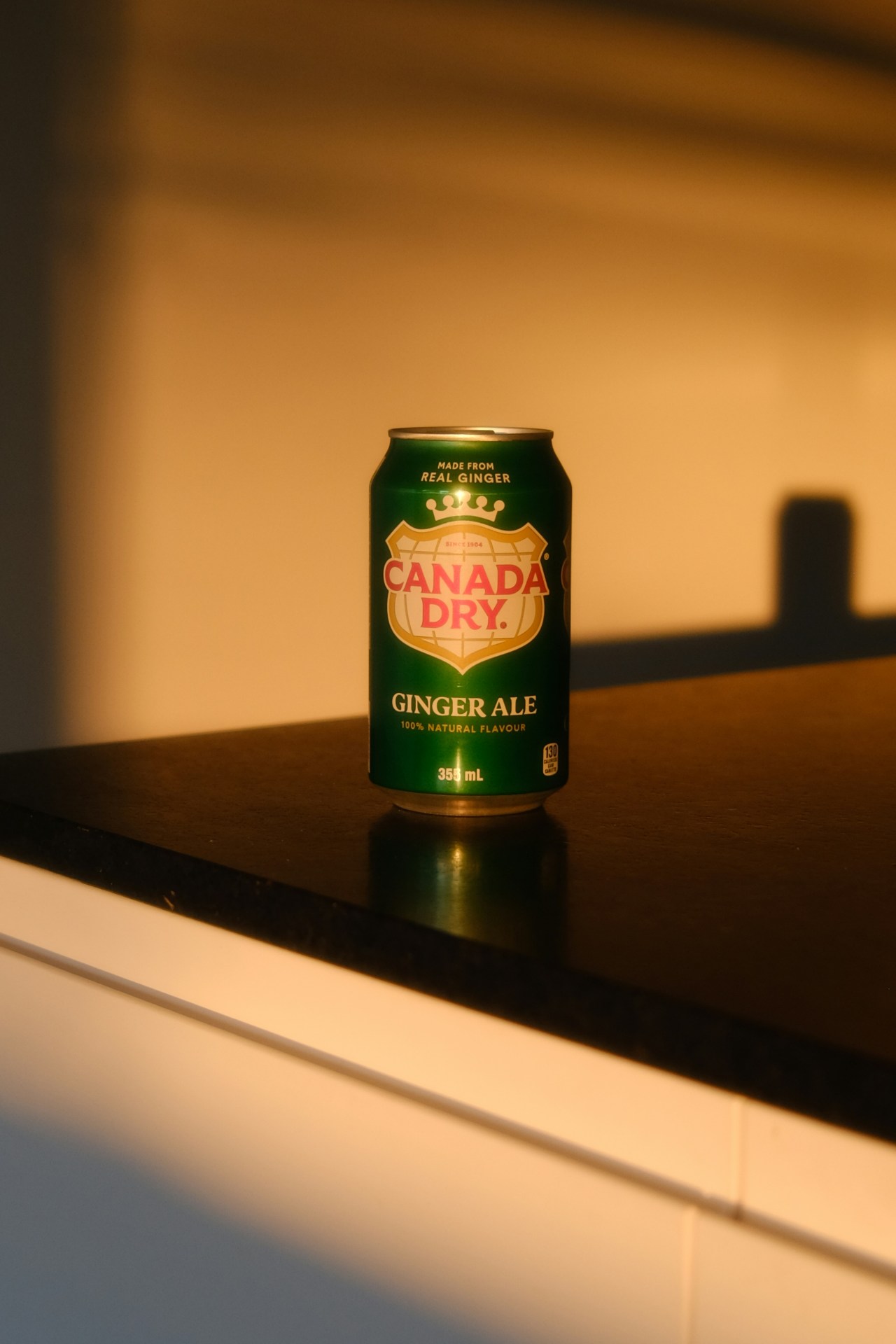
Canada Dry’s cans used to carry the line “Made from Real Ginger.” In the U.S., that claim came off after a class-action settlement, approved in April 2019, in which buyers said the soda held “less than 2 parts per million of a ginger flavor extract.” The company denied it, then paid out 40 cents a can, up to $40 a household with receipts.
“to avoid costly and protracted litigation.” — Canada Dry
In Canada the slogan stayed on the label, even though court papers in a Canadian class action put the amount at roughly one drop of ginger extract per 70 cans. The company said the Canadian wording “still accurately describes the product as it is formulated.”
Keurig Dr Pepper, which owns Canada Dry and Schweppes, won’t say how much ginger is actually in either drink. “Ginger” doesn’t even appear on the Schweppes label.
So the sick-day staple a lot of people reach for may not carry much of the root it’s named after. And the root itself is a mixed bag: the NIH says ginger “may be helpful for nausea and vomiting associated with pregnancy,” while “most studies of ginger for motion sickness haven’t shown it to be helpful,” and nausea trials use capsules of about half a gram to a gram a day.
Gastroenterologist Peter Sargon put the drink itself more bluntly in 2025: “There is no clinical evidence supporting the effectiveness of ginger ale as a remedy for an upset stomach.” He added that “the ritual of consuming a familiar remedy, like ginger ale, may enhance the placebo response.” Most commercial ginger ales also pack at least 10 teaspoons of sugar, per the Cleveland Clinic.