
Some readers encountered V.C. Andrews’s Flowers in the Attic as preteens, even though its publisher hadn’t initially aimed it at teenagers. Ann Patty, the editor who acquired the 1979 Gothic novel, thought its appeal to young readers lay in a familiar struggle: wanting freedom while parents still controlled your life.
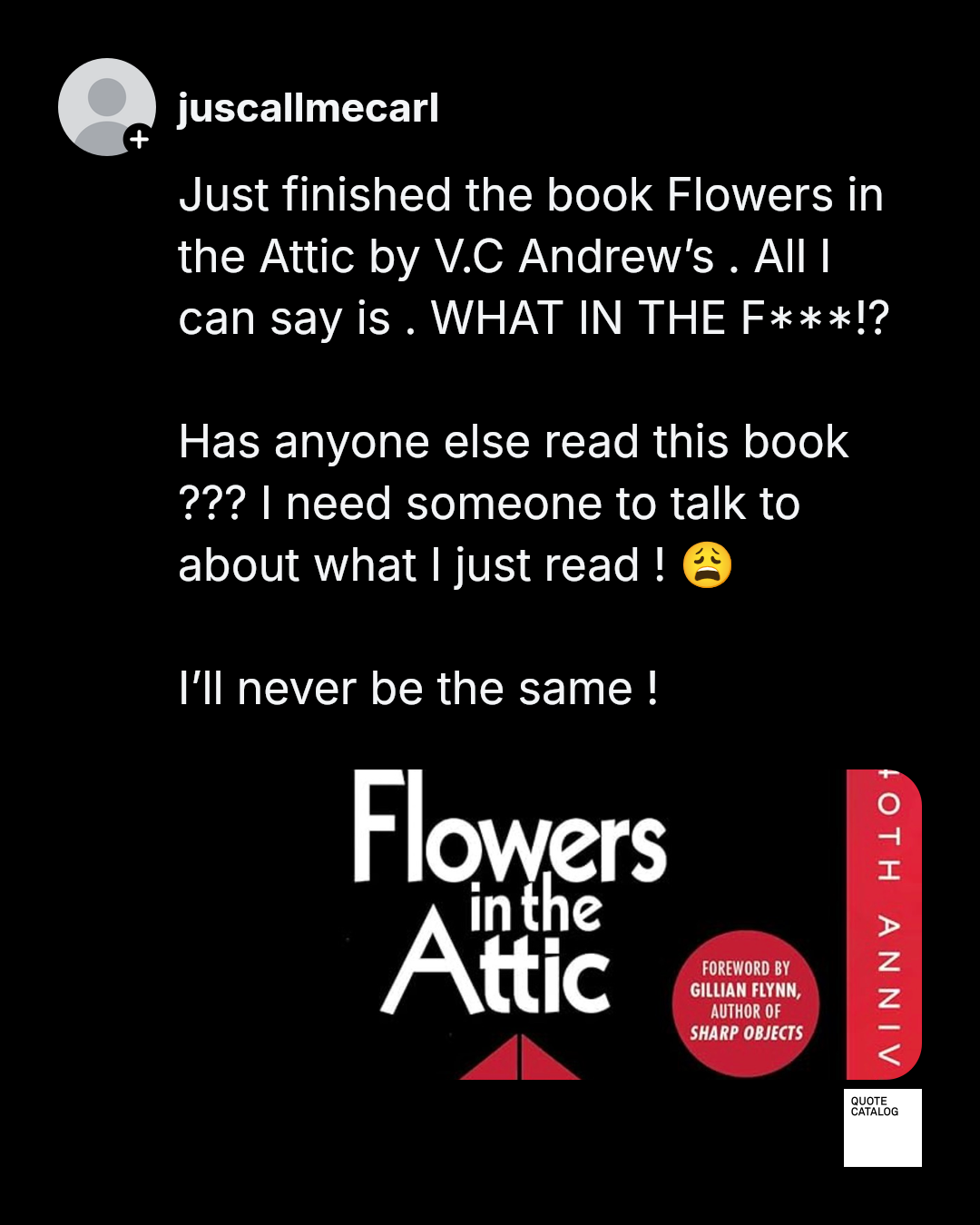
The novel takes that struggle to a horrifying extreme. After their father dies, the 4 Dollanganger siblings are concealed at Foxworth Hall as their mother pursues an inheritance.

They expect a short stay. Their confinement lasts years, in a story involving abuse, incest between siblings and betrayal by their mother.
“We did not market it initially to teenagers,” Patty said in a 2013 interview. Her explanation of its teenage appeal was her interpretation of what young readers recognized in it.
Individual reading memories capture how early the book reached some of them. One reader, @jenniferrebecca17, recalled reading her sister’s copy at 11 and described it as part of the “Gen X preteen package.” Another, @teribrownwrites, remembered reading Judy Blume’s Are You There God? It’s Me, Margaret and Flowers in the Attic during the same summer.
Patty also helped shape the cover readers would encounter. She rejected a design featuring daisies and insisted that the children appear. Art director Milton Charles devised a house with an attic window cut into the cover; opening it revealed all 4 siblings.