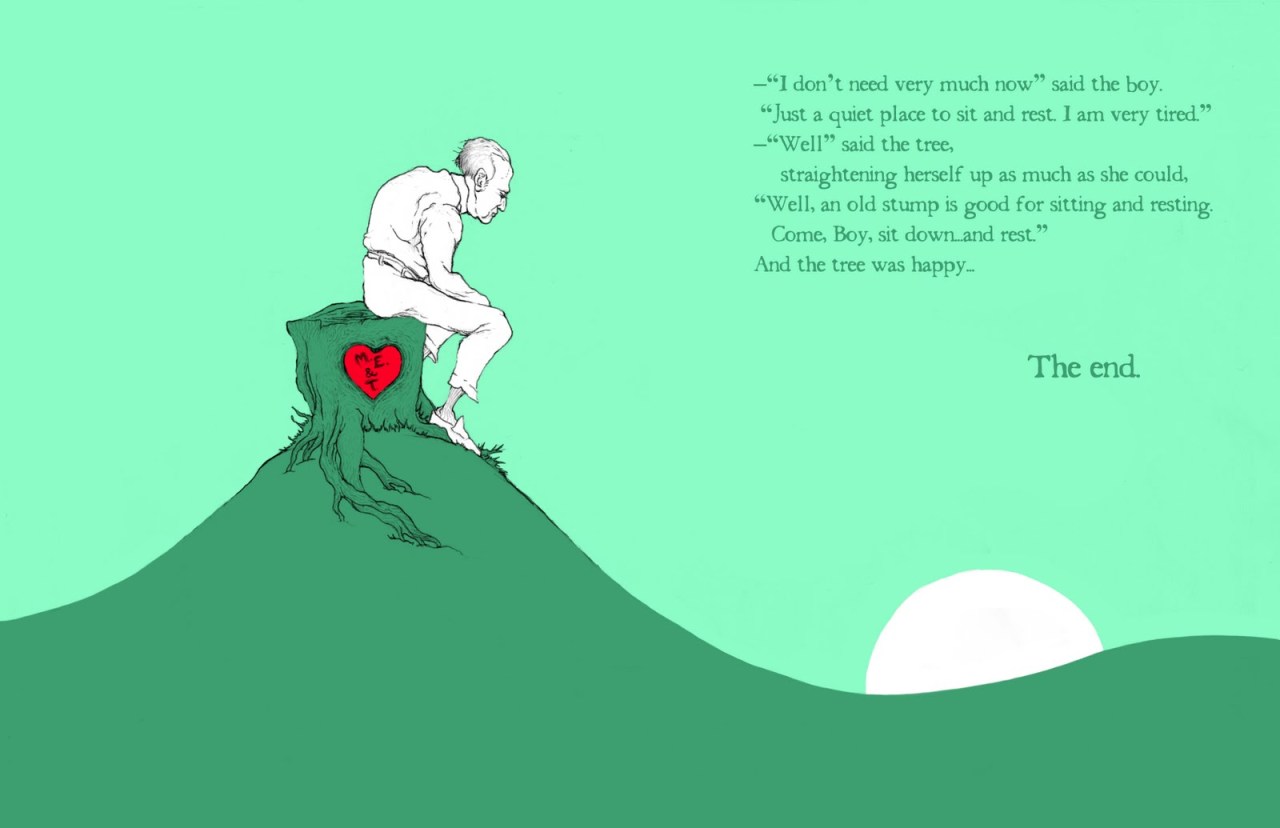
In Shel Silverstein’s The Giving Tree, the boy gets money from the tree’s apples, a house from her branches and a boat from her trunk. By the time he comes back needing somewhere to rest, all she can offer is her stump.
Silverstein described the relationship in 1978: “It’s just a relationship between two people; one gives and the other takes.” He also said the book had no message.
One reading takes that relationship as a warning about giving yourself away. In that reading, the recipient never asks how you’re doing. The book gives that reading a particularly painful detail: after surrendering her trunk, the tree is happy, “but not really.”
Calling it a cautionary tale, though, assigns Silverstein an intention he didn’t state in that interview.
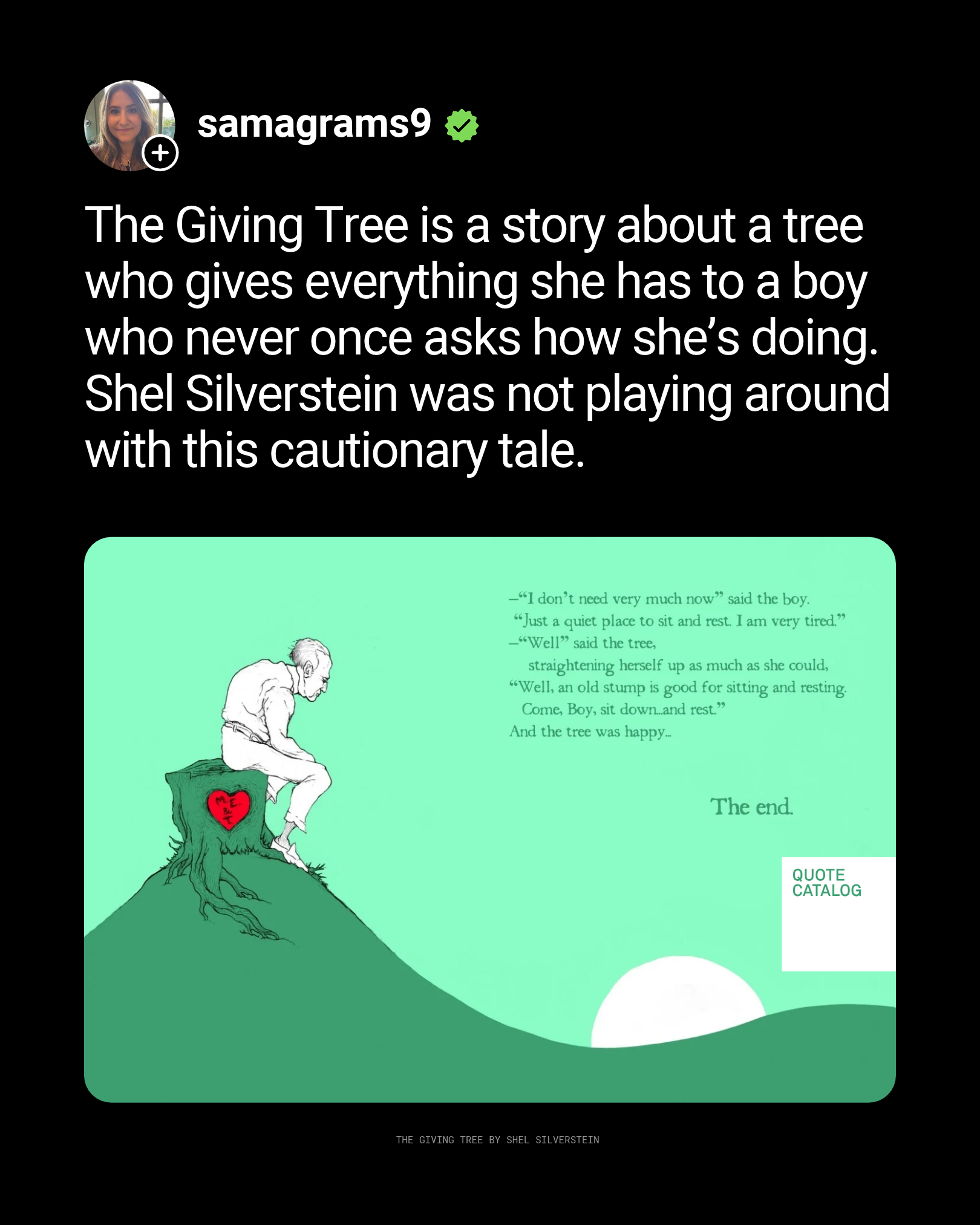
The sadness was there before publication. Silverstein said finding a publisher took 4 years, with some editors finding the story too sad.
William Cole, who rejected the manuscript in 1963, later described the tree as “one dum-dum of a tree, giving everything and expecting nothing in return.” Harper & Row published it on October 7, 1964.
Readers have also found unconditional love in the same relationship. Editor Ursula Nordstrom credited ministers with that interpretation.
Decades later, playwright Topher Payne gave the story a different resolution with his 2020 rewrite, “The Tree Who Set Healthy Boundaries.”
Silverstein’s own ending leaves the boy resting on what remains of her: “And the tree was happy.”