While writing Human Acts about the Gwangju killings, South Korean novelist Han Kang turned to the dead for help understanding human cruelty and dignity.
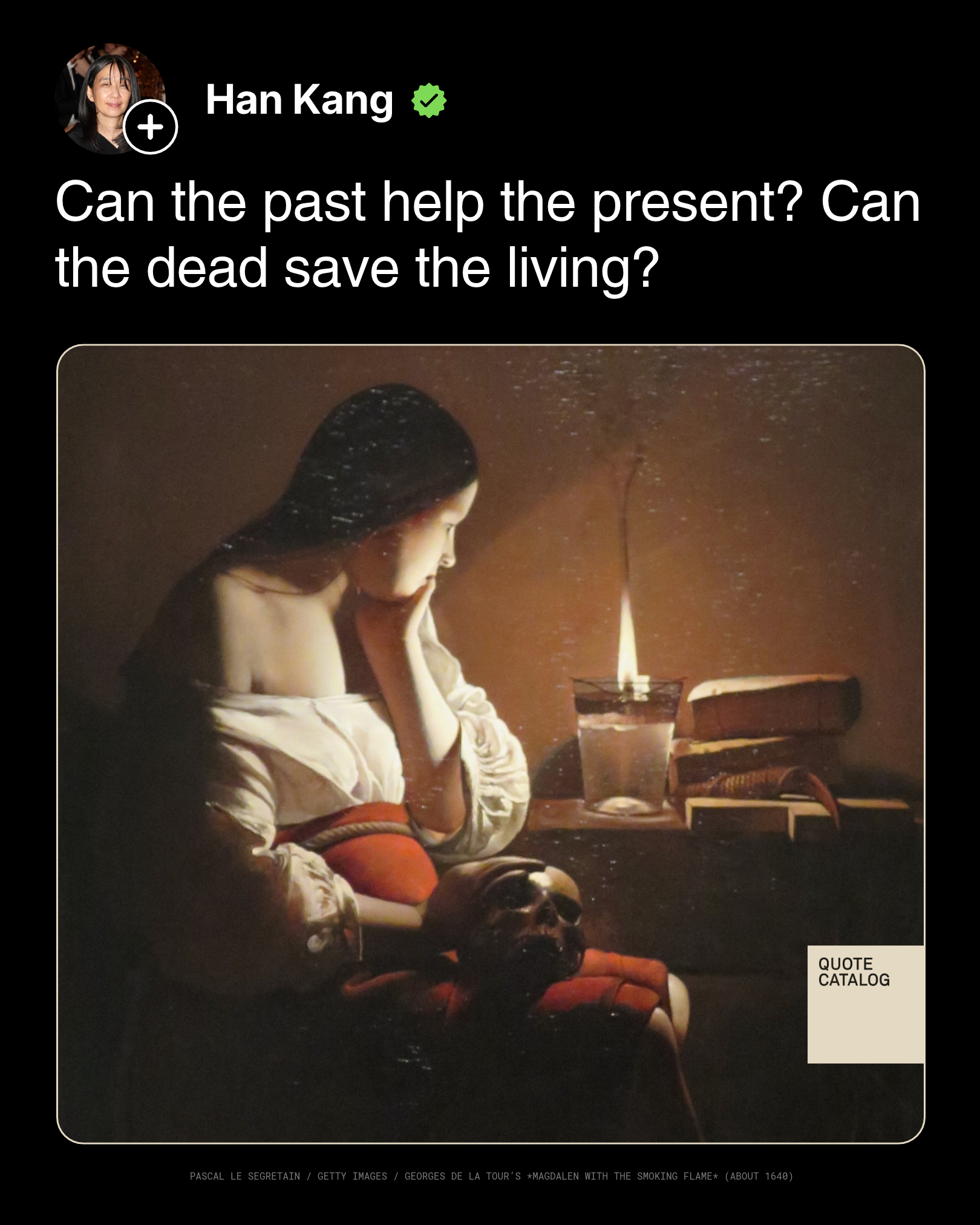
“Can the past help the present? Can the dead save the living?” she asks in her Nobel lecture, Light and Thread, delivered on December 7, 2024, translated by e. yaewon and Paige Aniyah Morris.
Han was 9 when her family left Gwangju for Seoul in January 1980, about 4 months before the killings. Her father, novelist Han Seung-won, brought home a survivors’ photo book. At 12, she secretly opened it and saw the violence people had inflicted on each other.
In her 20s, she kept copying questions about saving the dead into new diaries. Reading testimonies from December 2012 nearly made her abandon the novel.
A dead night-school teacher’s final wish to live helped her begin writing in March 2013. As she worked, she felt “the dead were saving the living.”
In May 2025, Hannah Bae took up the idea in an essay for the Asian American Writers’ Workshop, connecting it to shared grief.