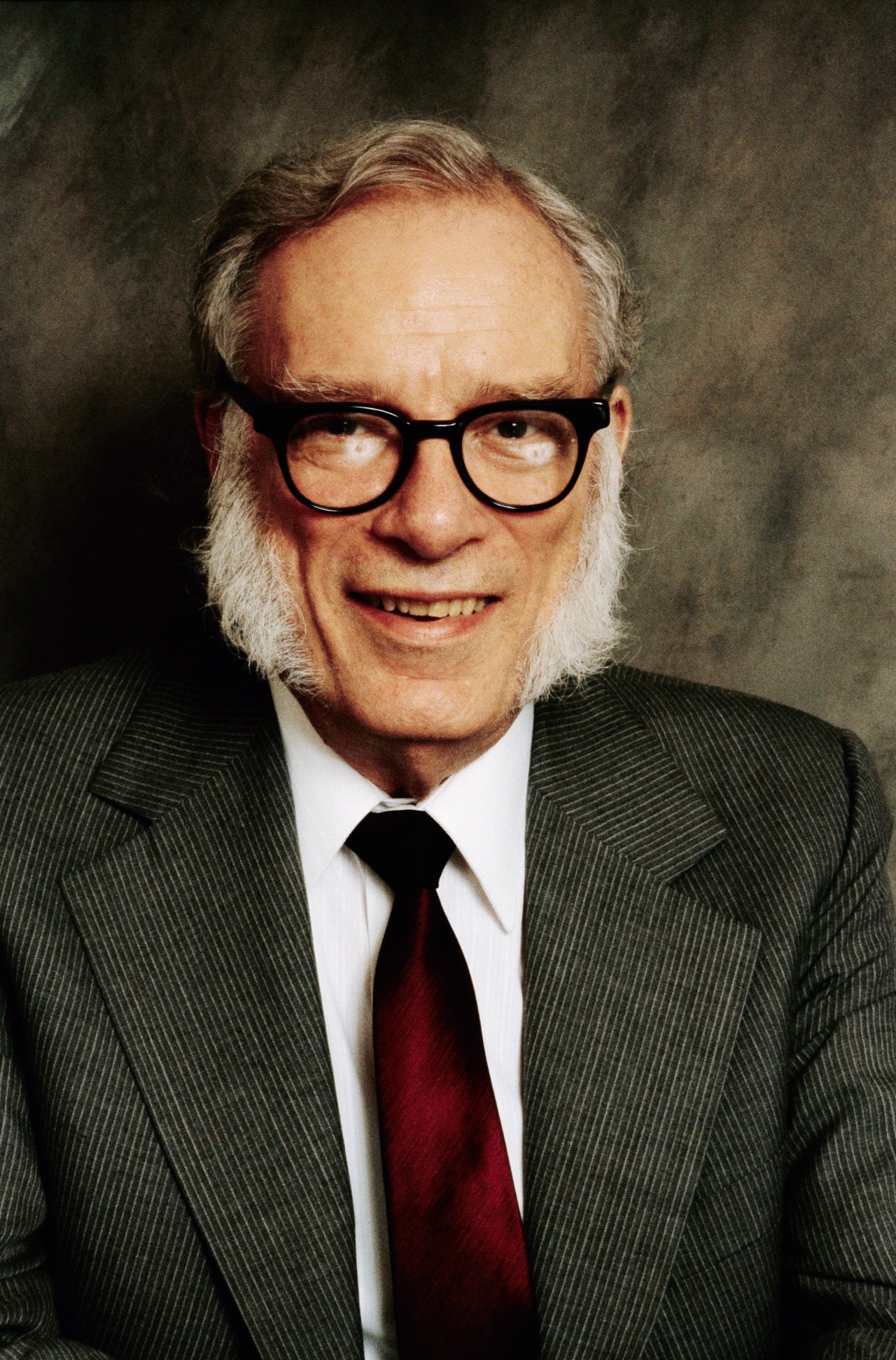
Isaac Asimov put one line about science and wisdom in print in 1988, as the epigraph to a chapter called Science and Society in “Isaac Asimov’s Book of Science and Nature Quotations,” the collection he edited with Jason A. Shulman. It sits on page 281, signed with his name: “The saddest aspect of life right now is that science gathers knowledge faster than society gathers wisdom.”
The “right now” wasn’t a throwaway. He dated the book’s foreword to New York City, 1987, so the sentence is a man in the late 1980s measuring how fast knowledge was piling up against how slowly the wisdom to handle it was catching up.
Asimov knew the terrain. After earning a Columbia doctorate in 1948, he went on to teach biochemistry at Boston University School of Medicine, rising to full professor there in 1979.
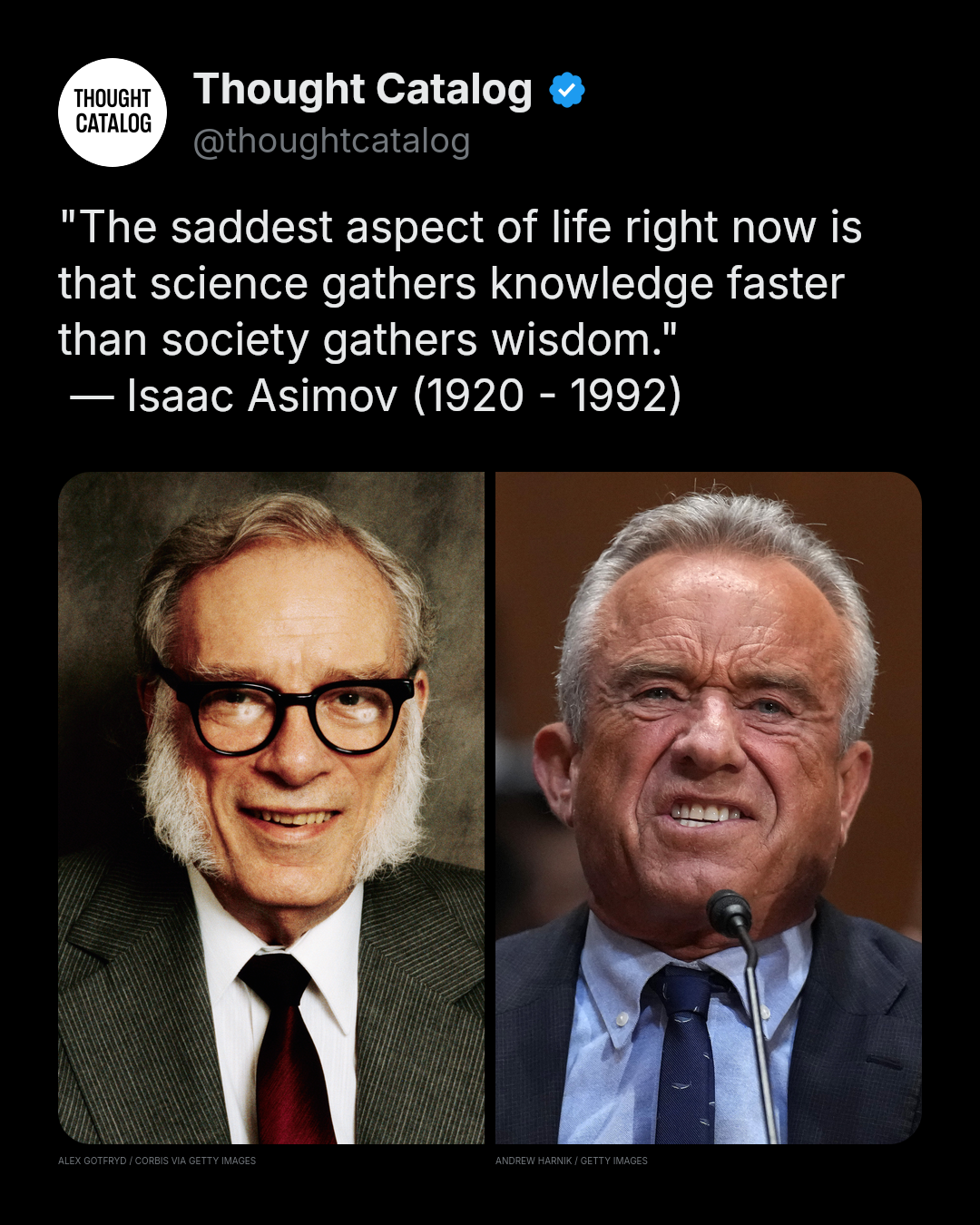
He also wrote or edited more than 500 books, and he was grouped with Robert A. Heinlein and Arthur C. Clarke as science fiction’s Big Three. The Foundation series and the Robot stories, with their Three Laws of Robotics, came from him.
In that same 1987 foreword, he warned that quotations are tricky and sometimes apocryphal, that a few are words a person should have said but never did. This one is not among them. The sentence has been checked against the scanned 1988 pages and matches word for word, down to “science gathers knowledge.”
Later printings garbled it. A 2011 book swapped “society” in for “life,” and an altered version floating around reads “knowledge gathers faster.” Neither is what he wrote.
Asimov died on April 6, 1992, at New York University Hospital at age 72. The reported cause at the time was heart and kidney failure. Years later, his wife Janet wrote that the real cause was HIV from a transfusion during his 1983 bypass surgery, kept quiet at the time.