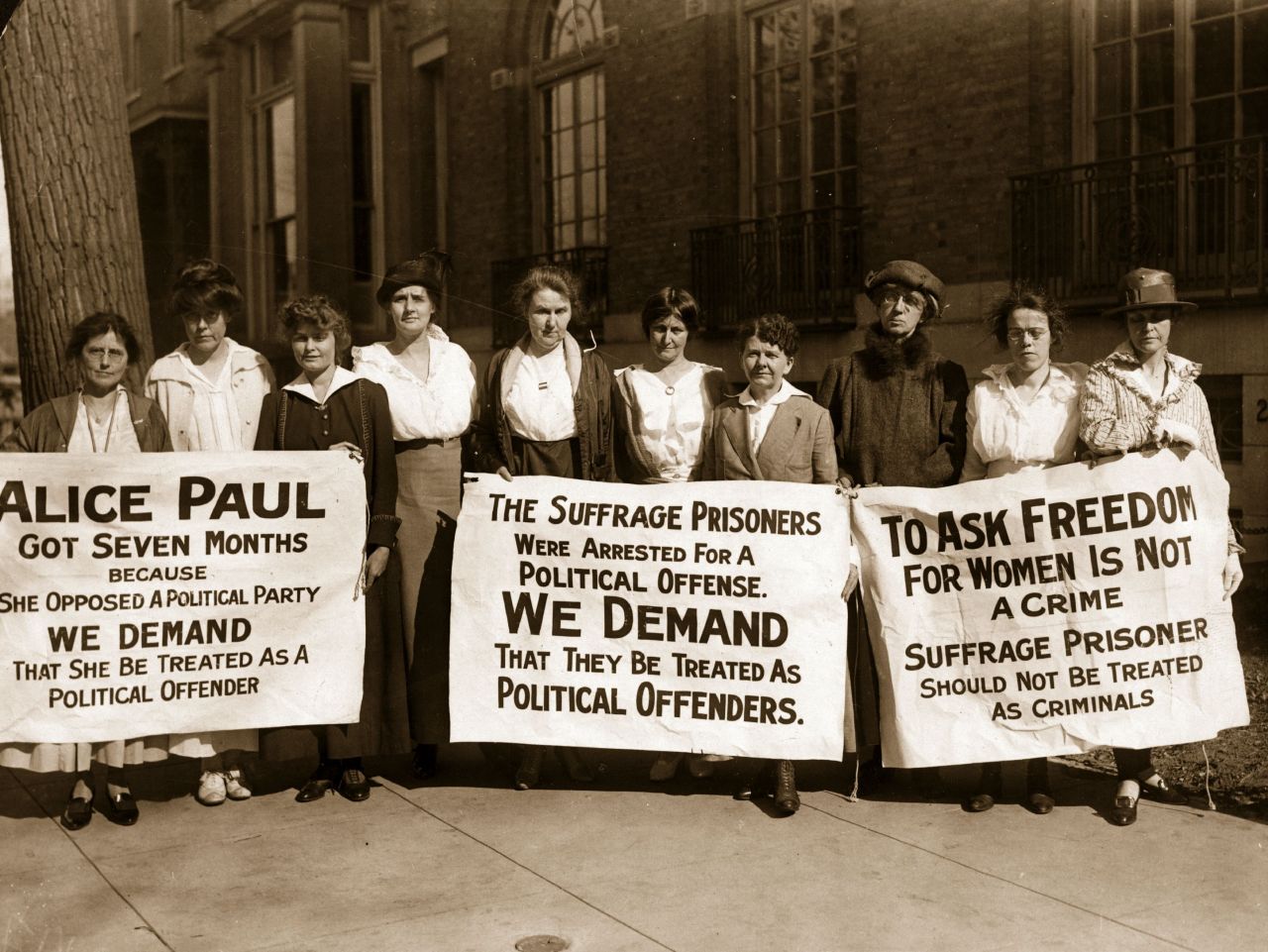
On November 10, 1917, police arrested 41 suffragists for protesting outside the White House. The women stood silently with banners quoting Wilson or challenging the contradiction between fighting for democracy abroad in World War I while denying it to American women at home.
Arrests for “obstructing traffic” or similar charges had started in June; many were fined or jailed (some at the Occoquan Workhouse in Virginia), and conditions grew harsher.
This was part of the ongoing White House picketing campaign that had begun on January 10, 1917, organized by Alice Paul and Lucy Burns to pressure President Woodrow Wilson into supporting a federal constitutional amendment granting women the right to vote.
By early November, Alice Paul was in jail on a long sentence, had begun a hunger strike, and was being force-fed. A message from her, smuggled out around November 9, reported her resistance and contradicted official claims.
In response, 41 women from multiple states (including as far as Oregon and Utah) marched in groups from National Woman’s Party headquarters to the White House gates carrying banners. They ranged widely in age; the oldest was 73-year-old Mary Nolan. Notable participants included Lucy Burns (recently released from a 60-day sentence) and others such as Utahns Lovern Robertson and Minnie Quay.
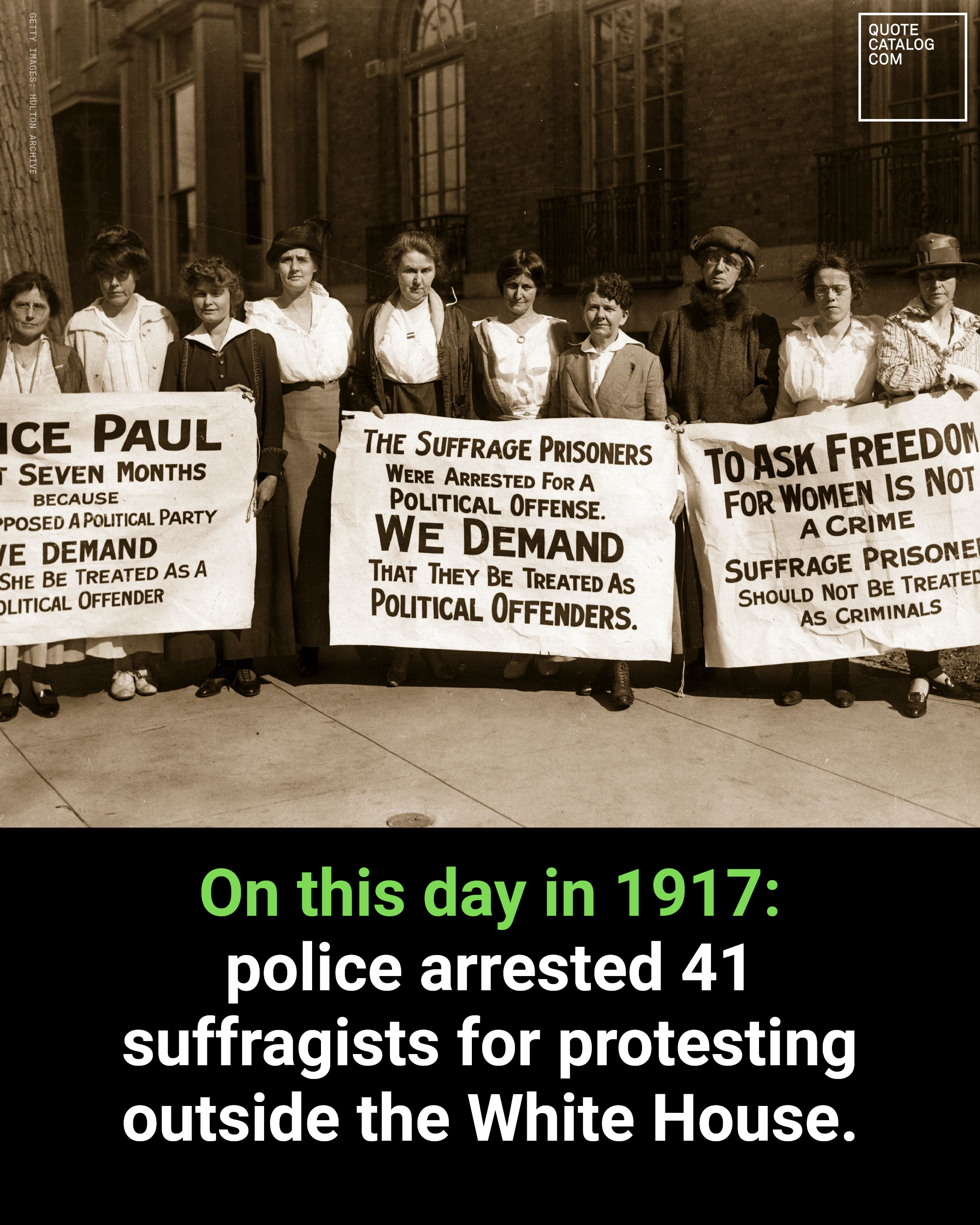
Police arrested all 41 for obstructing traffic. Contemporary accounts described relatively little disorder or hostility from the crowds that day, unlike earlier episodes, with some applause noted.
The women were booked, released on $25 bail each, and ordered to appear in court. On November 12 they received suspended sentences, but many immediately returned to the picket line, leading to further arrests.
Those subsequently imprisoned, including many from the November 10 group, were transferred to Occoquan. On the night of November 14, 1917, known as the “Night of Terror,” Superintendent William H. Whittaker ordered guards to brutalize the women.
Accounts describe Lucy Burns being manacled with her hands above her head to cell bars and forced to stand all night; Dora Lewis having her head smashed against an iron bed, knocking her unconscious; Dorothy Day (later of the Catholic Worker movement) being slammed onto a bench; and other beatings, dragings, and abuse. Alice Cosu suffered a heart attack after witnessing Lewis’s treatment.
The women demanded political-prisoner status, and many continued hunger strikes amid poor conditions.
Public outrage over the reports of mistreatment grew. By late November, under pressure, authorities released Alice Paul, Lucy Burns, and the other suffrage prisoners.
The episode helped shift public opinion and contributed to momentum for the suffrage amendment. Wilson eventually endorsed it; Congress passed the 19th Amendment in 1919, and it was ratified in 1920.