
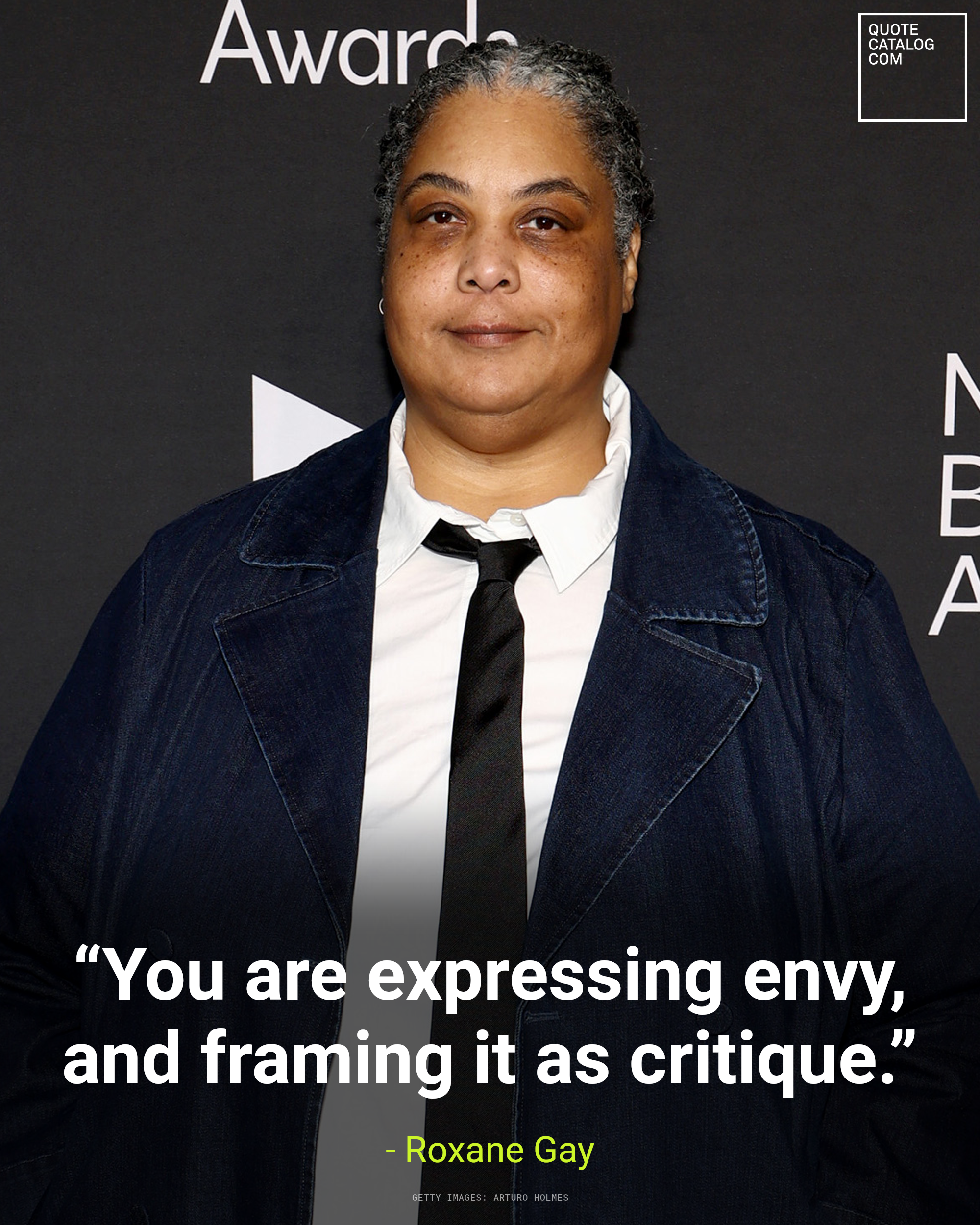
“You are expressing envy, and framing it as critique.” That line is Roxane Gay’s, and it names a move she has long watched people make: calling out a personal grievance dressed up as a judgment about someone else.
She is saying that the person’s stated criticism isn’t primarily about ideas, quality, ethics, or substance. It’s driven by envy, by resentment that the other person has something the critic wants: success, attention, confidence, a certain life, platform, body, career, relationship. That envy gets dressed up in the more respectable language of analysis, skepticism, moral judgment, or “concern.”

This is a common dynamic in cultural criticism, online discourse, creative fields, and everyday social life. Success or visibility, especially for people who don’t fit conventional norms, frequently attracts responses that claim to be about the work or the ideas but are actually about status, comparison, or the discomfort of someone else thriving.

Gay has long written and spoken about the gap between legitimate critique and personal hostility, harassment, or bad-faith attacks directed at her as a prominent Black, fat, queer feminist writer.
The line is effective because it refuses the disguise. It names the emotional root without getting drawn into debating the surface-level arguments. It treats the “critique” as a symptom of wanting what the other person has, or not wanting them to have it, rather than an independent judgment.
In short, it’s a concise way of saying you’re reacting to their having something you want, and you’re presenting that reaction as thoughtful criticism.