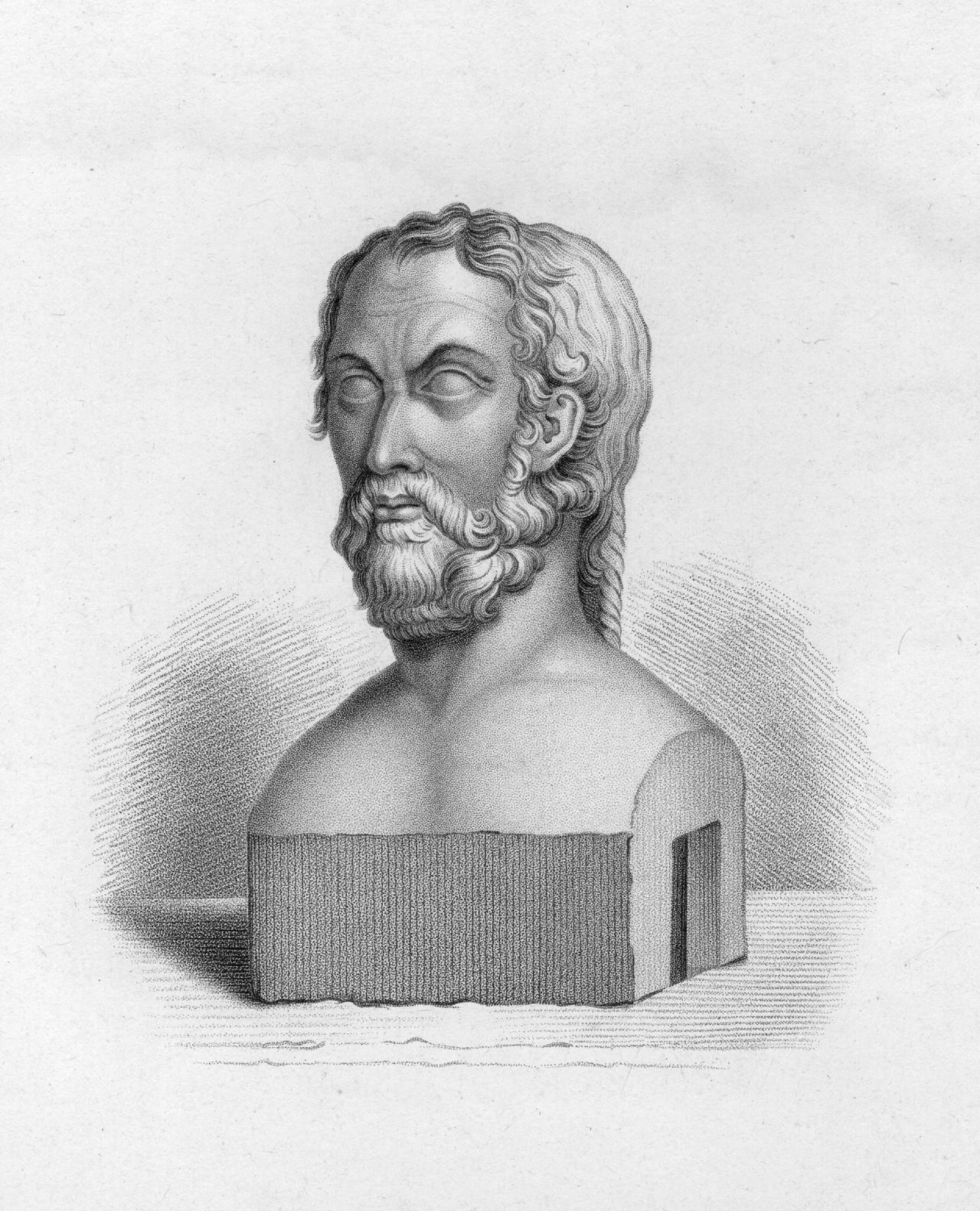
In his account of the Peloponnesian War, the Greek historian Thucydides records what Athenian envoys told the neutral island of Melos: survival depended on surrender. After Melos was defeated, Athens killed the captured men and enslaved the women and children.
In his History of the Peloponnesian War, 5.89, the envoys say: “the strong do what they can and the weak suffer what they must.” That’s Richard Crawley’s translation.
The question the passage raises is whether justice can protect a small state against a stronger one.

Thucydides was the son of Olorus and held gold-mining rights in Thrace. He survived the plague in Athens in 430-429 BC. By 424 BC, past 30, he was an Athenian general.
That year, he sailed with 7 ships to save Amphipolis. Brasidas captured it before he arrived.
Athens sentenced Thucydides to exile, which lasted 20 years and gave him access to observe the war. His history includes the confrontation at Melos; the date he drafted it isn’t known.
His exile ended with Athens’ fall in 404 BC. He likely died soon afterward, leaving the narrative unfinished.
Thomas Hobbes took up the work centuries later: his first publication, in 1629, was an English translation of the whole History.