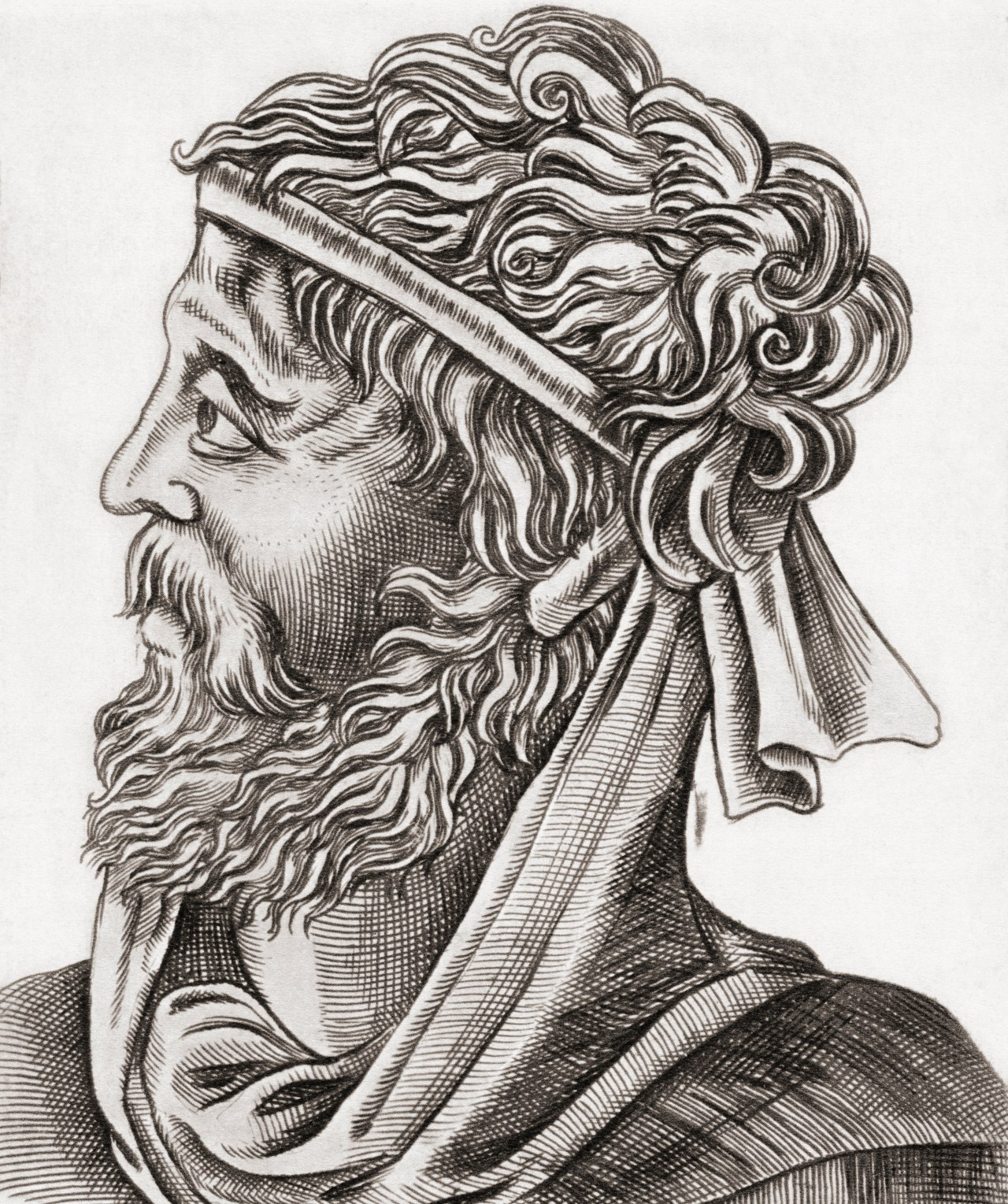
“I hate and I love” opens Catullus’s poem 85, a 2-line Latin poem about feeling love and hate for the same person at the same time. The line is sometimes credited to Anne Carson, who translated it.
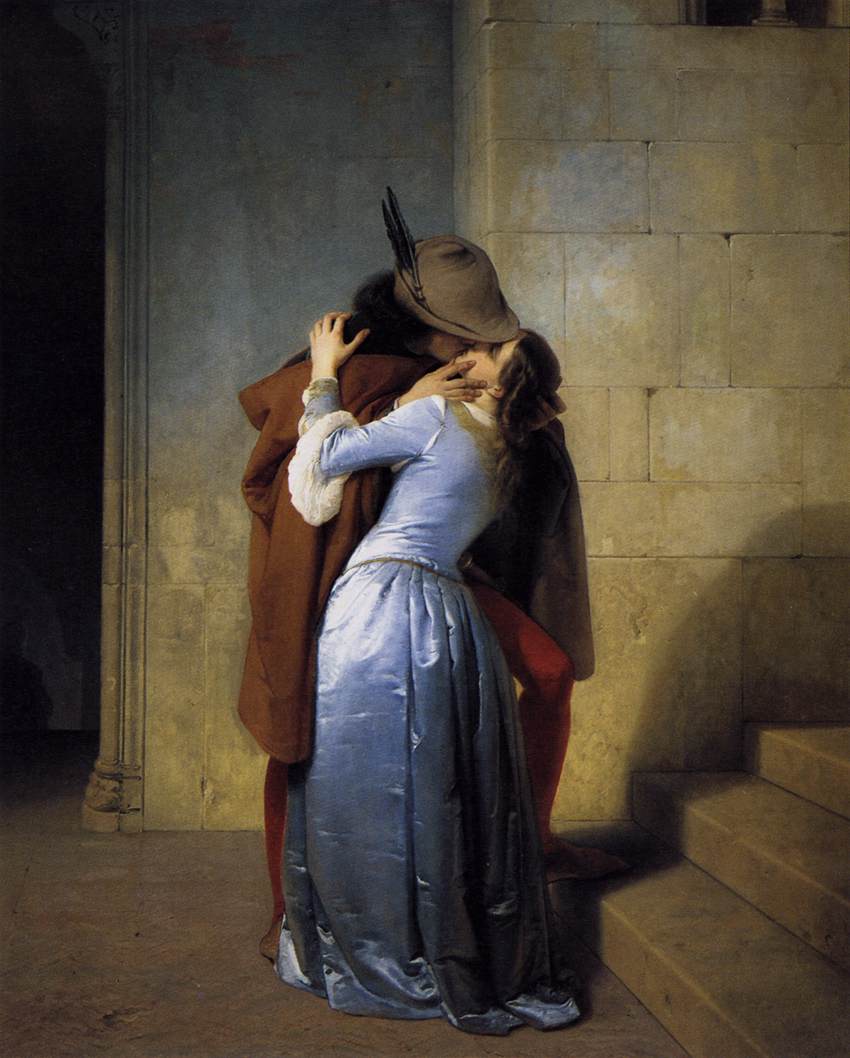
In Carson’s translation in Eros the Bittersweet, the poem reads: “I hate and I love. Why? you might ask. I don’t know. But I feel it happening and I hurt.” Catullus can describe the pain even as he struggles to explain the feelings that produce it.
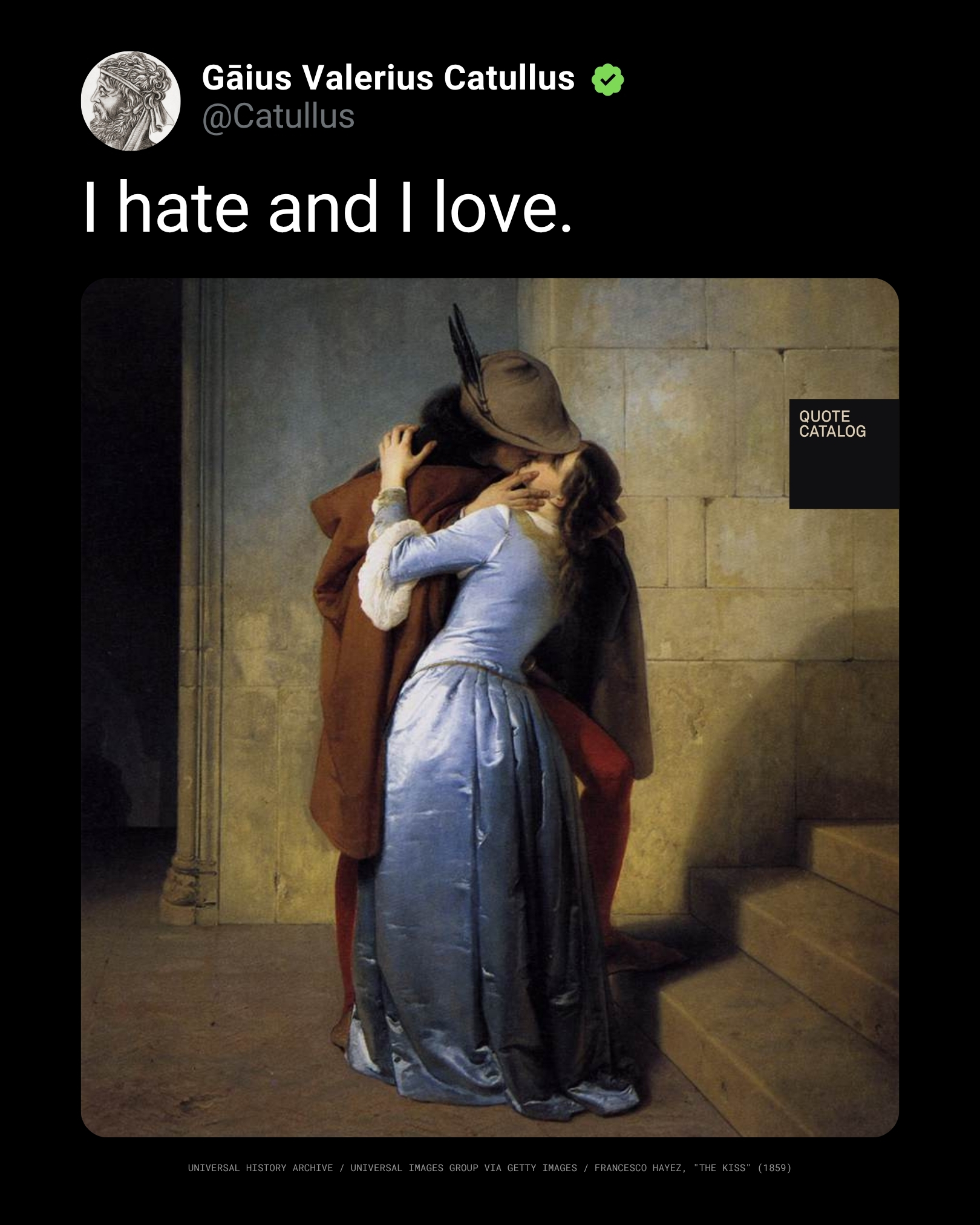
The Roman poet lived around 84-54 BCE. He wrote the poem around 55 BCE, during his affair with a married woman he called Lesbia.
Scholar Armand D’Angour reads it as the agony of loving her while hating her infidelity, and argues that the poem’s question asks how both feelings can coexist.
Centuries later, Carson made the Latin phrase part of her 1981 Toronto dissertation title, Odi et amo ergo sum: “I Hate and I Love, Therefore I Am.” That same year, Dominick Argento set Catullus’s words to music in I Hate and I Love, a cantata for chorus and percussion.