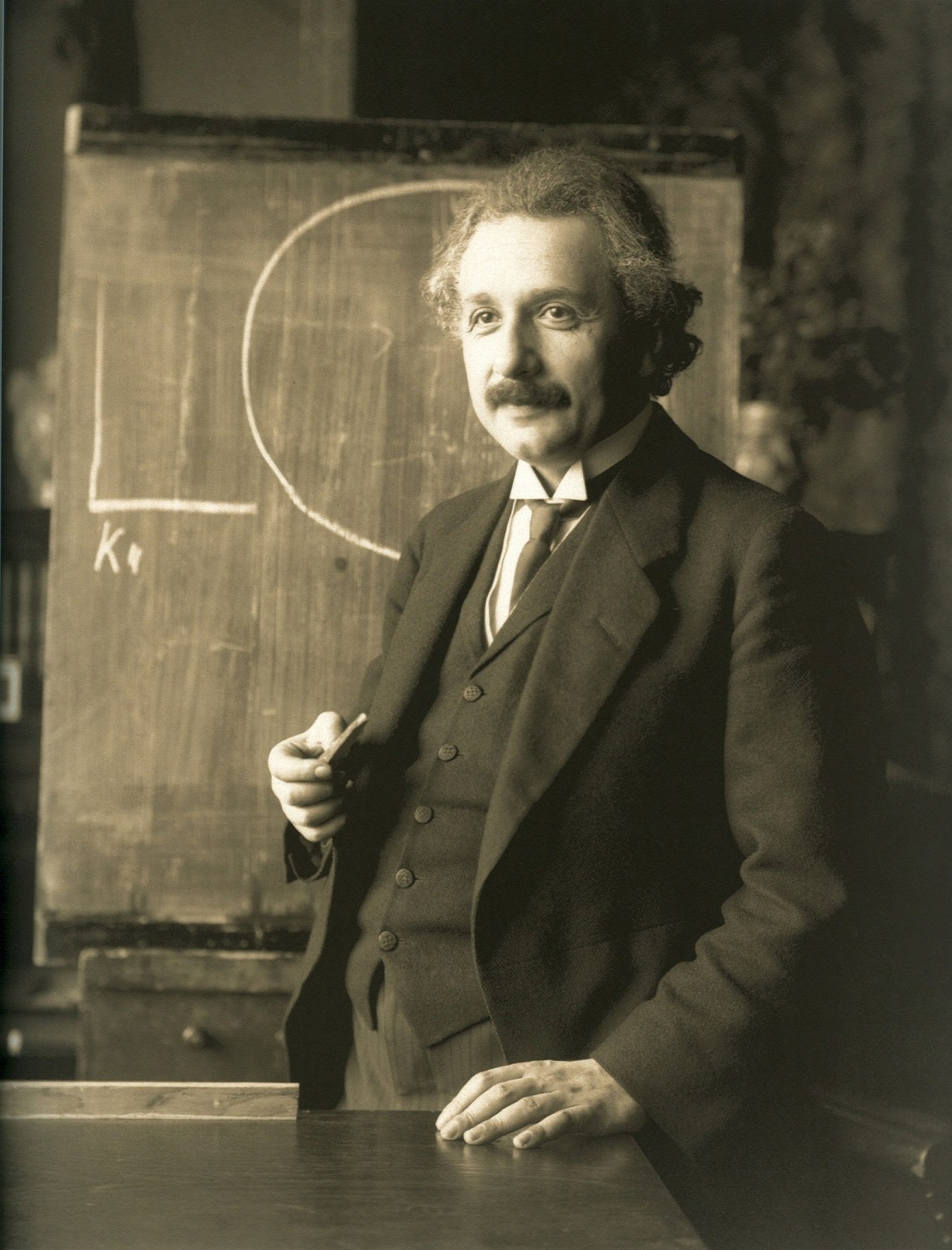
Albert Einstein believed solitude changes as you age: hard to bear when you’re young, and a pleasure later on.
At 57, he wrote “Self-Portrait” for Georges Schreiber’s 1936 book Portraits and Self-Portraits. The piece was reprinted in Out of My Later Years (1950), page 5.
Einstein had called himself a “lone traveler” and a “horse for single harness” in writings around 1930–31. His sense of detachment grew with age: he wrote of feeling distant even from his immediate family, while science remained central to his life.
He’d settled in Princeton, New Jersey, in 1933, after deciding never to return to Germany as the antisemitic campaign against him grew. In “Self-Portrait,” he asks, “What does a fish know about the water in which he swims all his life?”
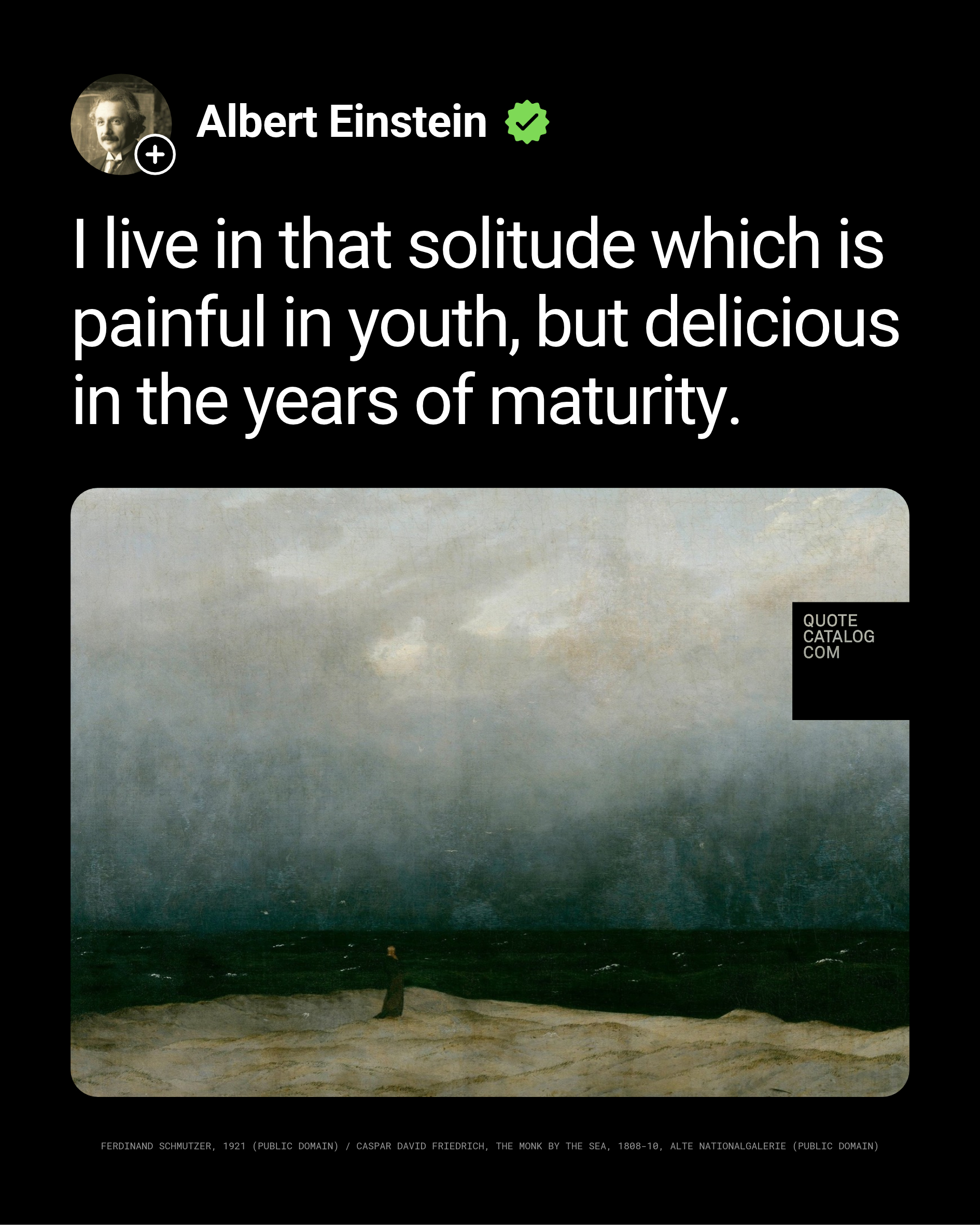
The line before his closing thought reads, “Arrows of hate have been shot at me too; but they never hit me, because somehow they belonged to another world, with which I have no connection whatsoever.” He ends: “I live in that solitude which is painful in youth, but delicious in the years of maturity.”
His wife and cousin, Elsa Löwenthal, whom he married in 1919, helped shield him from public demands while managing their household and traveling with him. After a long illness, she died on December 20, 1936, at their Princeton home, 112 Mercer Street, the same year he wrote the piece.
Einstein continued to live there with his secretary, Helen Dukas, and stepdaughter Margot; his sister Maja joined them later.
The painting is Caspar David Friedrich’s The Monk by the Sea, from 1808 to 1810, in the Alte Nationalgalerie in Berlin.