
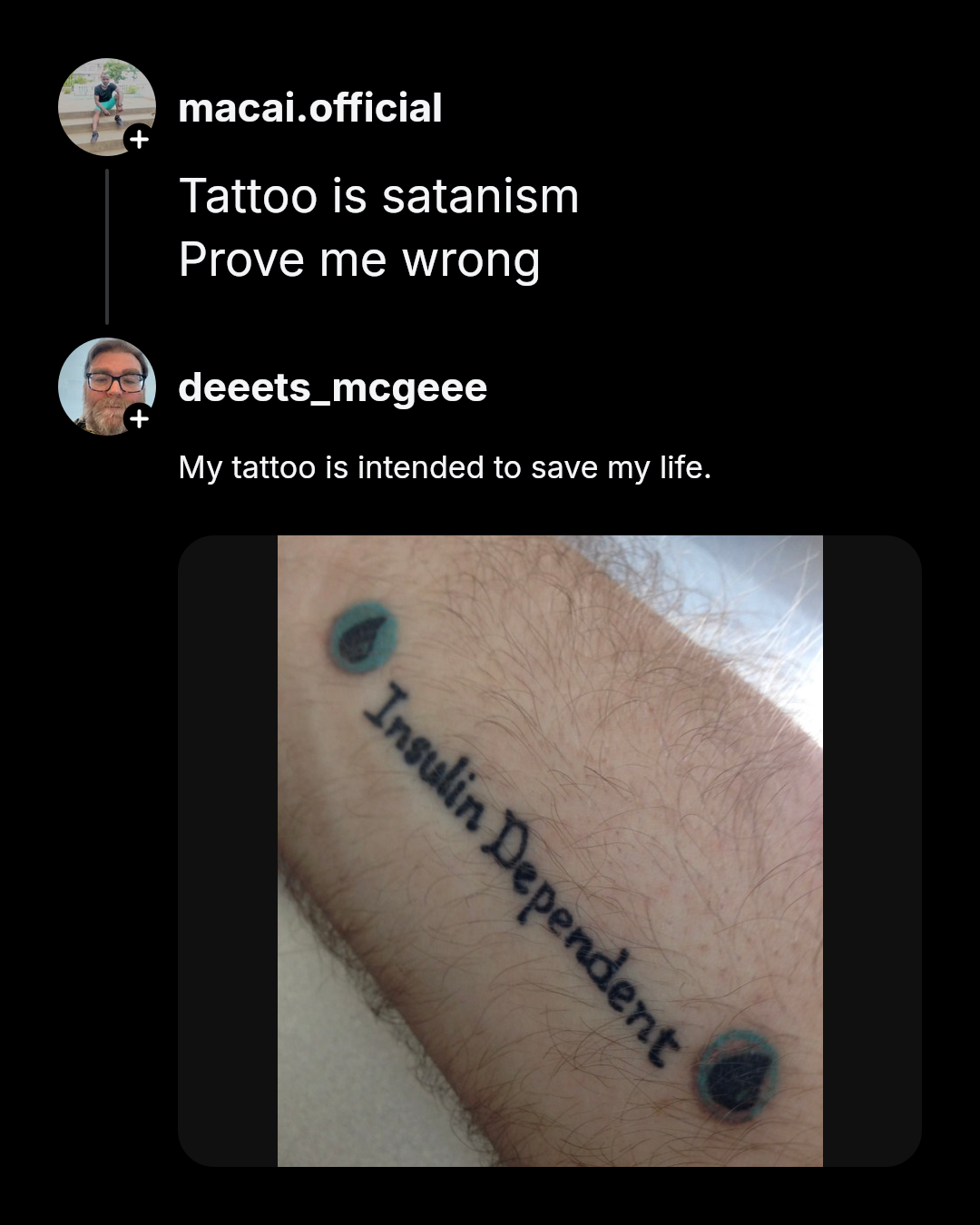
A wrist tattoo belonging to @deeets_mcgeee reads “Insulin Dependent.” It’s part of a wider practice of putting medical information directly on the body in case the person wearing it is unconscious or unable to speak.
“My tattoo is intended to save my life.” — @deeets_mcgeee
Medical-alert tattoos are a pretty cool use of ink. Some identify diabetes or epilepsy. Others flag a severe drug allergy or a need for particular medication. Diabetes UK describes people using tattoos to communicate that they have diabetes in an emergency.
The appeal is easy to understand. You can’t leave a tattoo on your nightstand, lose it at the gym or forget to charge it. The information stays with you, even when your phone or wallet doesn’t.
What the tattoo actually says matters. “Penicillin allergy” names a specific drug someone may need to avoid. “Insulin Dependent” tells them the person uses insulin.
For someone with adrenal insufficiency, a warning about the need for emergency steroids can be particularly important because delayed treatment during a crisis can be fatal. Clear, readable wording gives someone more to work with than a medical symbol alone.
The goal is to give whoever is helping useful information about your health. But a tattoo can be missed, and something that was accurate when you got it may change as your health or treatment changes.
Use a medical-alert bracelet or necklace too, and keep your phone’s Medical ID and a wallet card updated. Those can carry a fuller list of medications, allergies and emergency contacts, details that won’t fit into a few words on your wrist.