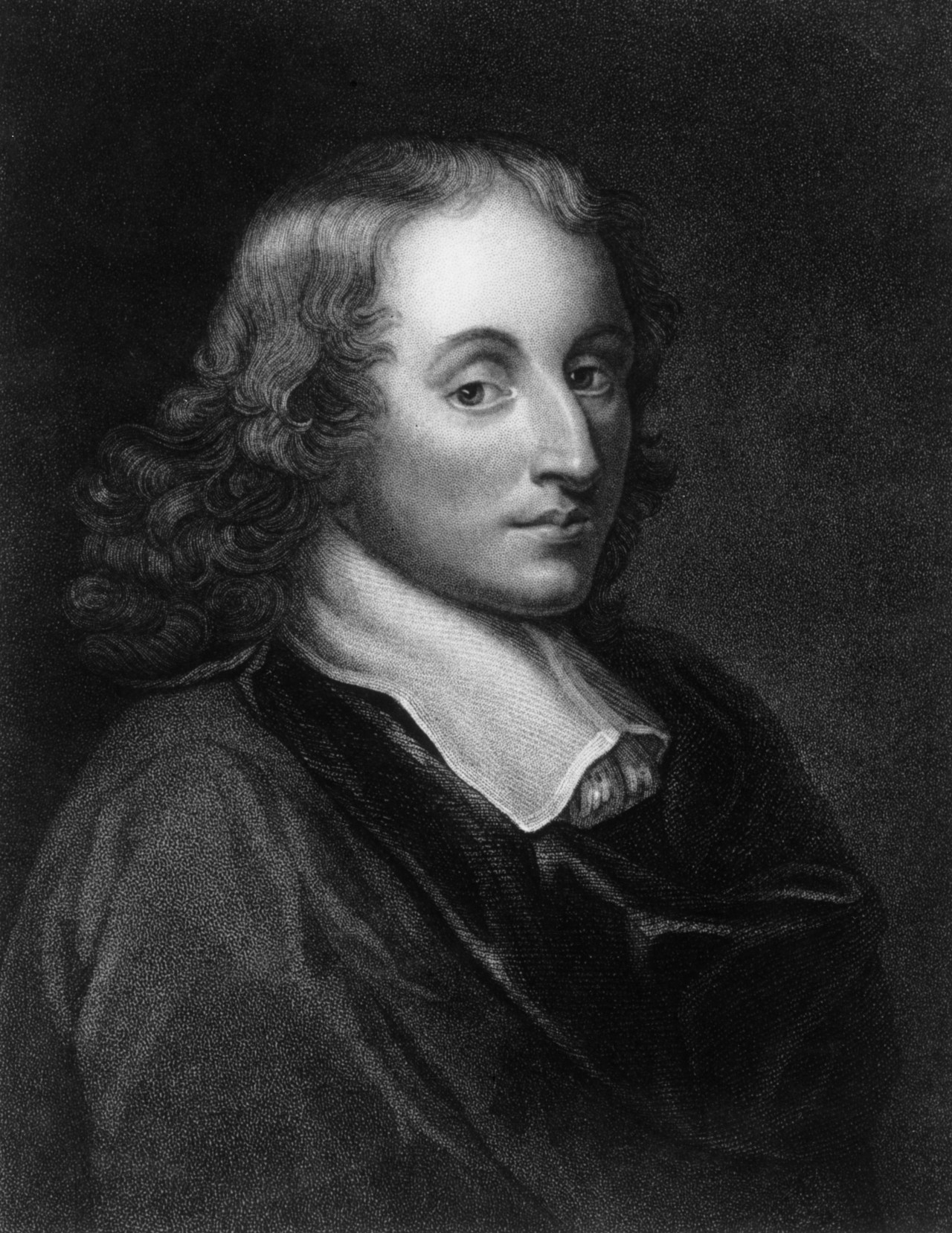
Blaise Pascal argued that all human unhappiness comes down to a single fact: people cannot stay quietly in their own chamber. The French mathematician and philosopher believed distraction keeps us from dwelling on illness and death, while stillness exposes the distress we’re trying to escape.
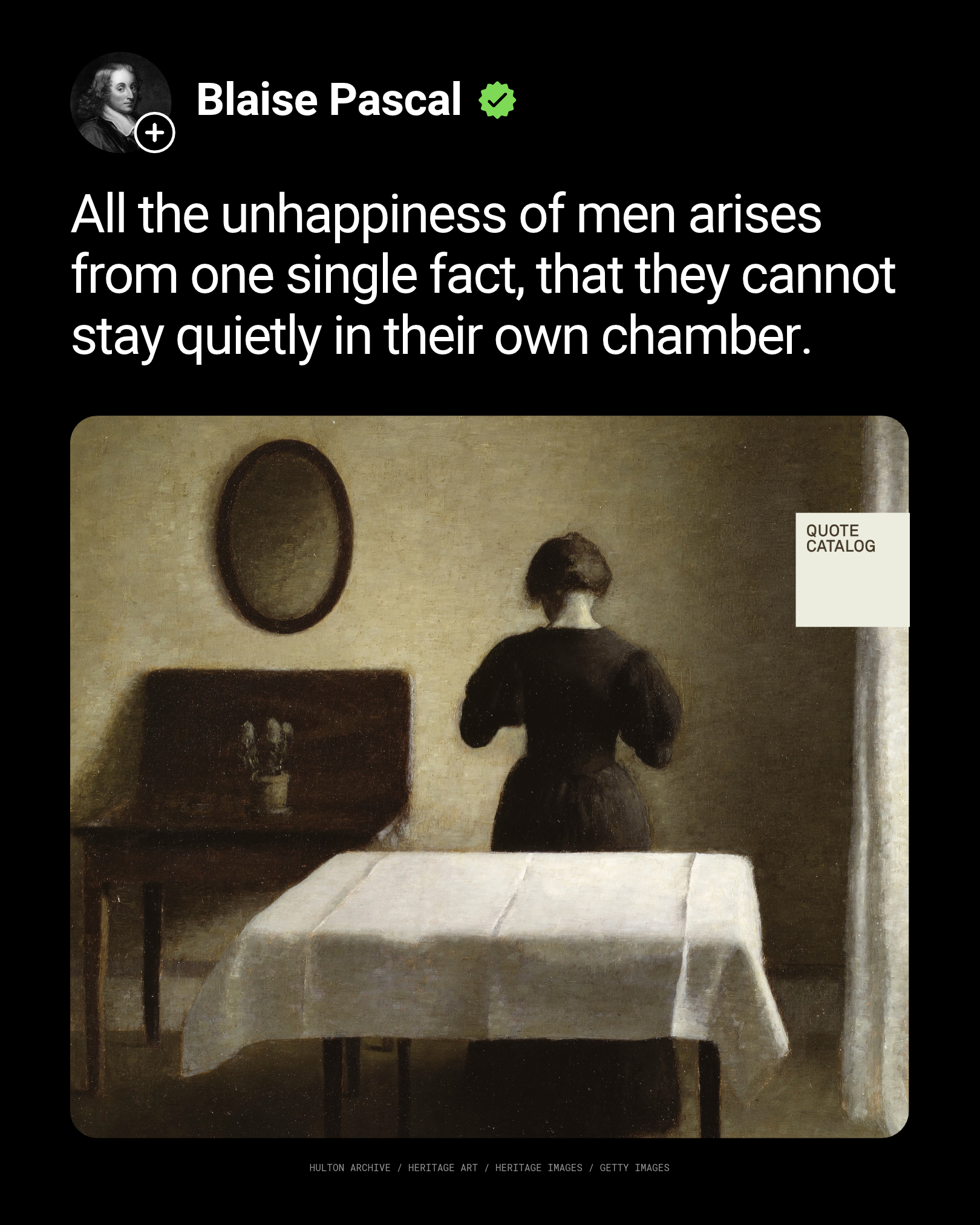
In Pensées, fragment 139, translated by W. F. Trotter, he wrote: “I have discovered that all the unhappiness of men arises from one single fact, that they cannot stay quietly in their own chamber.”
His example was a king surrounded by pleasures who, without diversion, could be more miserable than his poorest subjects. Thoughts of death, disease and danger would still reach him. Hunting supplied another example: the pursuit itself kept the mind occupied.
Pascal lost his mother, Antoinette Bégon, at 3. In 1631, his father, Étienne, moved the family to Paris and educated him himself. His later work included the Pascaline mechanical calculator, probability with Fermat, Pascal’s triangle and hydrostatics, including Pascal’s principle.
On November 23, 1654, Pascal experienced his Night of Fire, an intense mystical experience lasting from about 10:30 p.m. to midnight that drew him toward Port-Royal. He recorded it in a text known as the Memorial and sewed it into his coat lining. It was found after his death.
In his 30s, between 1656 and 1662, he worked on the unfinished notes defending Christianity that became Pensées. From 1658, he endured worsening pain, especially in his head.
In June 1662, he gave his home to a family suffering from smallpox and moved to his sister Gilberte’s. He died on August 19, 1662, at 39. Pensées was published in 1670.
Jean Giono returned to the same fragment in his 1947 novel Un roi sans divertissement, taking both its title and closing question from Pascal.
The streamer Clavicular, whose real name is Braden Peters, offers a modern extreme of this tension: diversion becomes a job, and everyday activity becomes something to monetize for an audience. Describing what he’d do without streaming, he said, “Probably just be Ladaring,” using slang for laying down and rotting, a retreat into inactivity without work or education.
Yet he’s also said he’d rather stay home doing nothing than make millions streaming. He’s described the clubs, events and in-real-life streams as work he does for money: “You think this is a passion project? Why the f*** else would I be streaming? You think I like doing this shit?”
Pascal’s diversion offered relief from thoughts that surfaced in solitude; Peters describes a paid public life that he also struggles to sustain. After an overdose, he said he couldn’t do in-real-life streams without substances, which he’d used to feel “neurotypical” in public. He’s also said people drawn to his viewership wouldn’t spend time with him off-stream: “not a chance.”