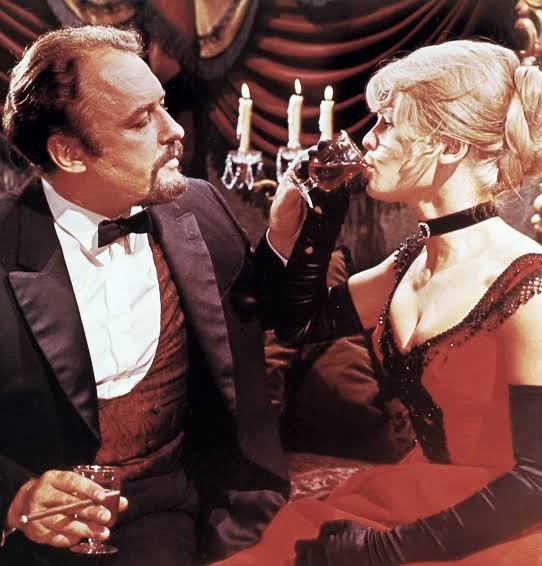
“There are two kinds of men, and only two, and that young man is one kind. He is high-minded. He is pure. He is the kind of man that the world pretends to look up to and in fact despises. He is the kind of man who breeds unhappiness; particularly in women. Now, do you understand?” — Viktor Komarovsky, Doctor Zhivago
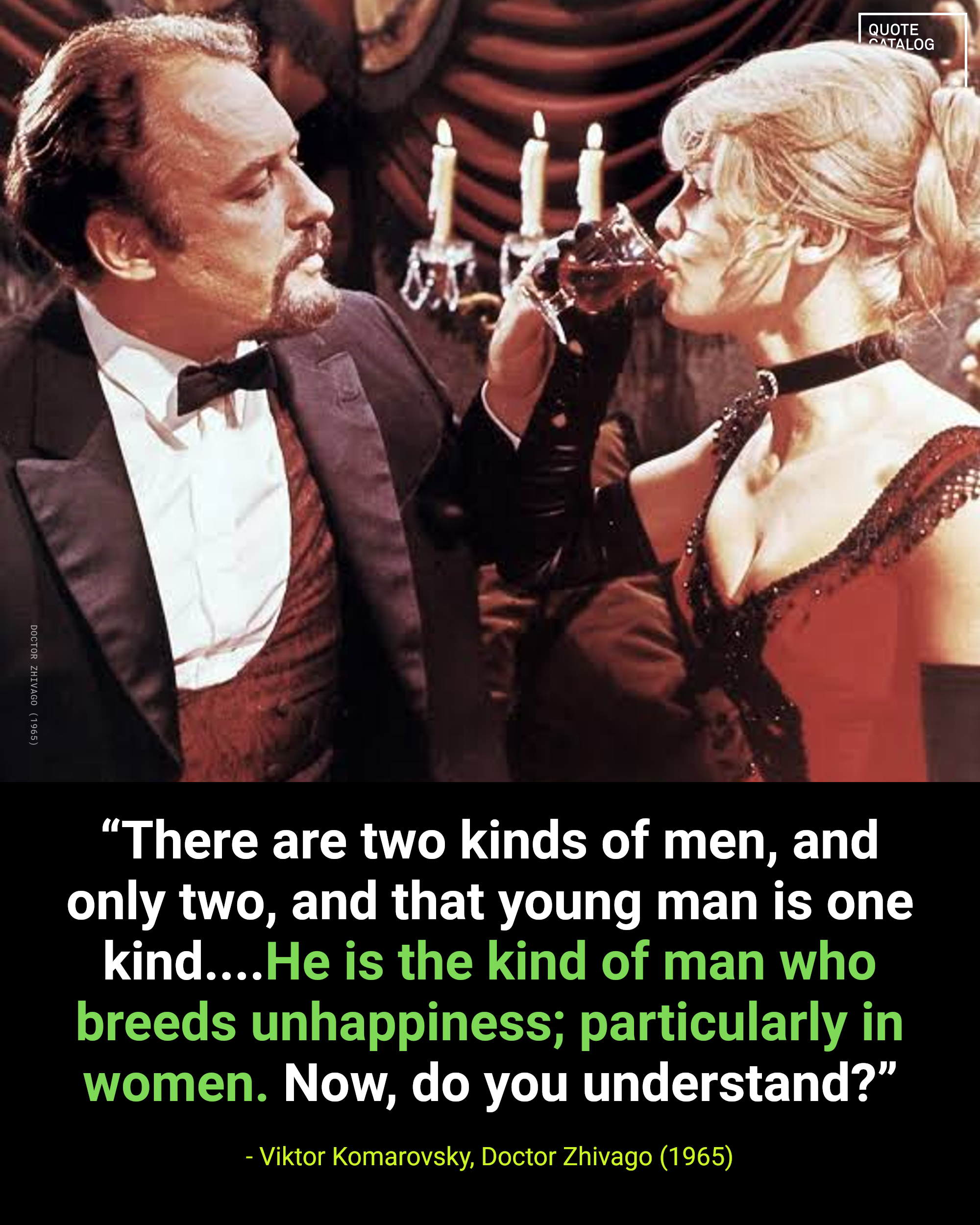
Komarovsky says those words to stop Lara from marrying Pasha Antipov, warning her that a principled man will only make her miserable. In David Lean’s 1965 film Doctor Zhivago, the powerful older lawyer has already sexually exploited Lara, so his advice about her fiance doubles as a way to keep his hold over her.
Played by Rod Steiger, Komarovsky makes Pasha’s idealism sound like a threat. The young man who would be looked up to, he says, is the one who breeds unhappiness, “particularly in women.”
His division of men into two kinds conveniently leaves room for his own character. He describes the alternative as “alive,” presenting worldly experience and appetite as reasons Lara should want a man like him. Pasha, who later becomes the revolutionary Strelnikov, represents the idealism Komarovsky wants her to distrust.
Then he turns the argument against Lara herself. He declares that women also fall into two kinds and uses her sexual history to put her in a category he can shame: “You, my dear, are a slut.” The warning about marriage becomes a claim that he gets to define what she wants and whom she deserves.
Lara slaps him. He hits her back harder.