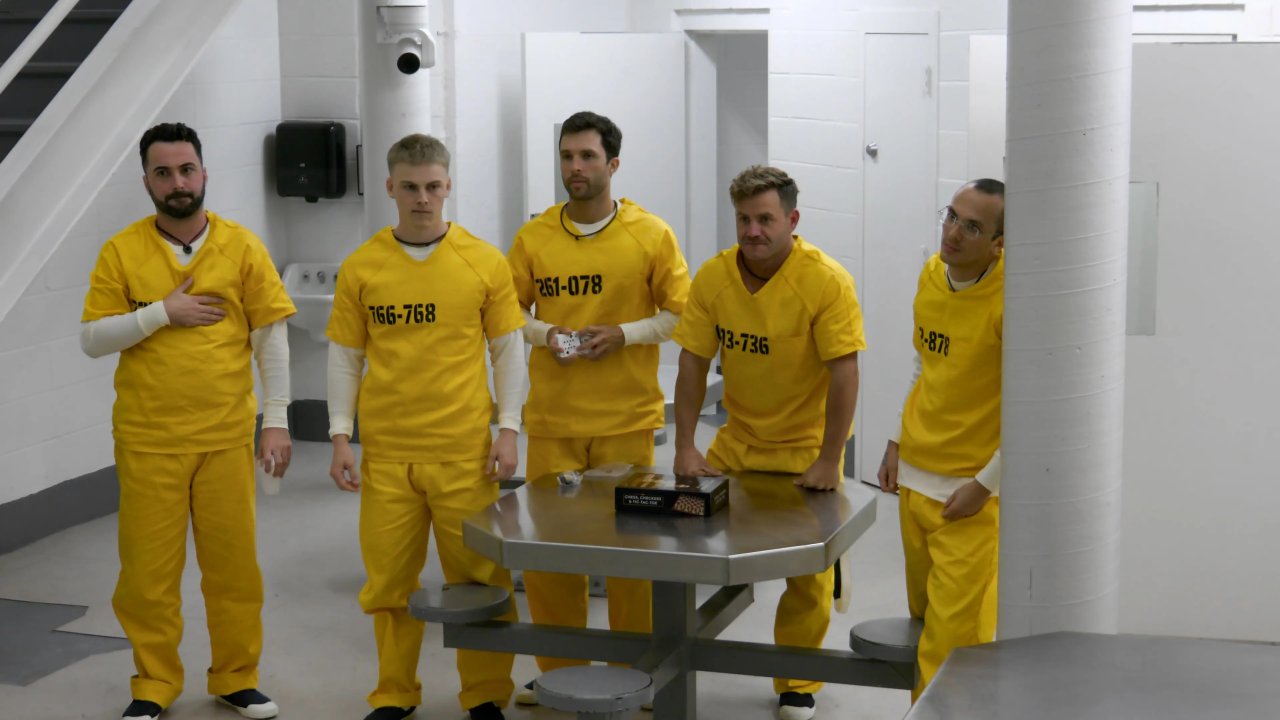
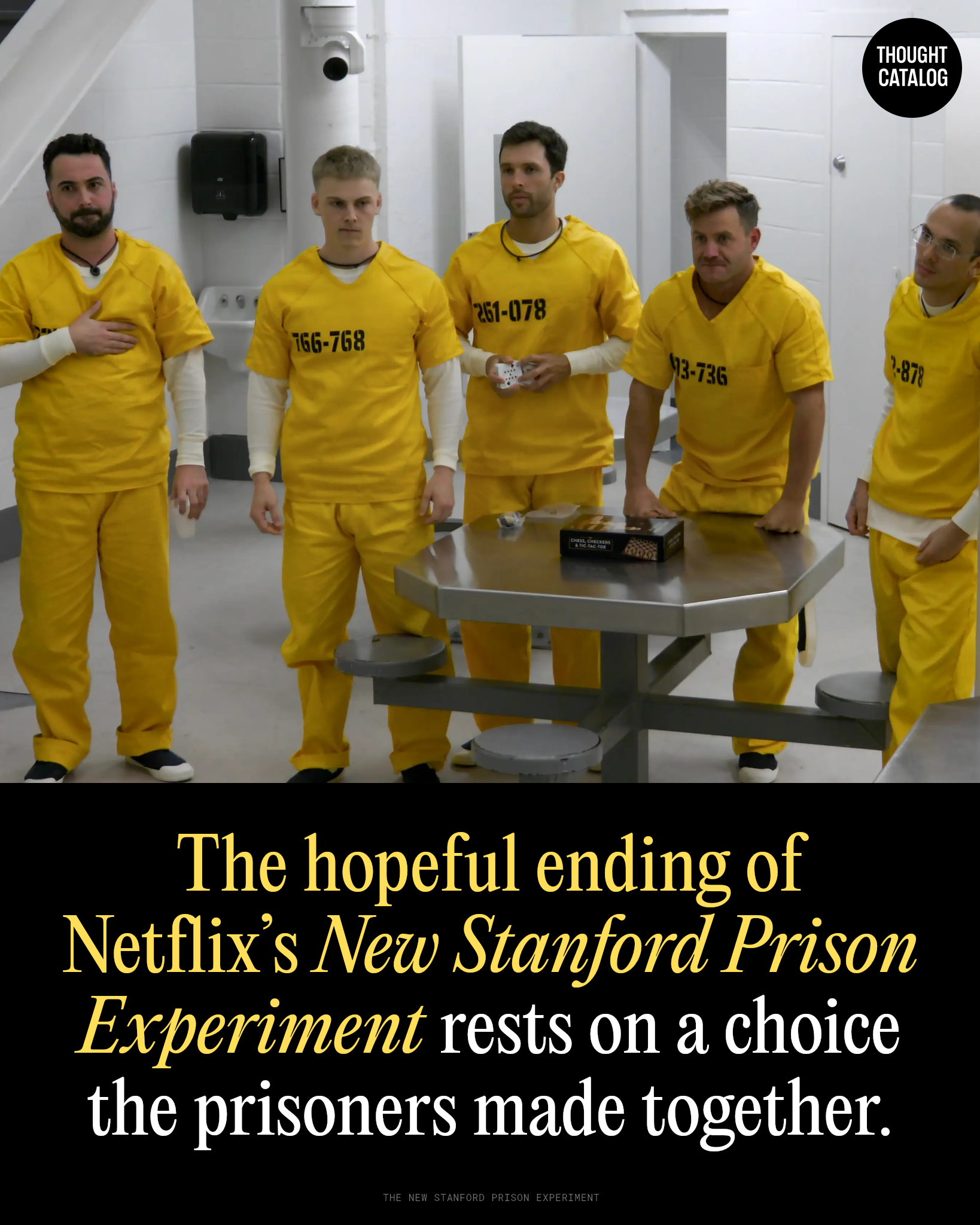
On day 13 of Netflix’s “The New Stanford Prison Experiment,” the prisoners left together, arm in arm. Comedian Mike Paramore had persuaded fellow prisoner Chris Lee that a shared exit, expressing racial unity, would mean more than staying to complete the planned 2 weeks.
That agreement came during the final phase, “Self-Governance,” when participants could decide for themselves what to do. Lee was among those who initially wanted to finish.
The group’s eventual decision to walk out surprised executive producers Jane Lipsitz and Dan Cutforth. “We felt it was really powerful and did not see that coming at all,” Lipsitz said.
The 6-episode series, which premiered October 21, brought 30 people from different racial, economic and geographic backgrounds into a disused cell block inside an operating prison. The group included 3 women. Initially, 8 participants became guards across 2 shifts, while 22 became prisoners.
Its historical model ended much earlier. Philip Zimbardo’s 1971 Stanford experiment assigned 24 male college students, all white except for 1 Asian American participant, to simulated prison roles.
They were paid $15 a day for a planned 2-week study. Following a rebellion, escalating punishments and psychological breakdowns, it was stopped on day 6.
The Netflix production used psychological screening, background checks and informed consent, with medics, psychologists and off-duty guards available around the clock. Participants could say “pineapple” to leave or request a conversation with a therapist or producer. Behavioral scientist Alison Wood Brooks, journalist Trymaine Lee and former federal corrections officer Michael Cantrell observed the experiment.
Even with those safeguards, 5 people quit. Larry Foy, known as “Scary Larry,” left first after returning to a prison environment brought distress tied to his own incarceration.
By day 6, the production also faced a potential breaking point. Prisoners Pete and Brandon were confined to their cell for 23 hours a day after conspiring against the guards. Brandon considered leaving, then stayed after an emotional call with his mother.
The producers moved participants through Transformation, Hierarchy, Role-Reversal and Self-Governance. During Role-Reversal, Pete and Brandon became guards, while guards including Chet Hudson and Chris Lee became prisoners.
Hudson quit after 1 day. When prisoners crowded Pete and Brandon and came close to attacking them, Laura Berens and the other 2 women on the opposing guard shift intervened.
The collective exit followed those conflicts. Cutforth cautioned against treating the ending as a settled finding about race or gender: “I would hesitate to come to any conclusions about race and gender, but I think it holds up a mirror to a lot of those issues and is very revealing.”