
OpenAI CEO Sam Altman argues that scarce computer memory goes further in shared cloud servers than in personal computers, where he says it can sit idle 95% of the time. His own company’s projected demand for that memory reaches as high as 900,000 DRAM wafers a month.
On John Collison’s “Cheeky Pint” podcast, released Oct. 29, Altman was asked how high memory and GPU prices were working out. “Bad,” he said. “I think the invisible hand is failing right now.”
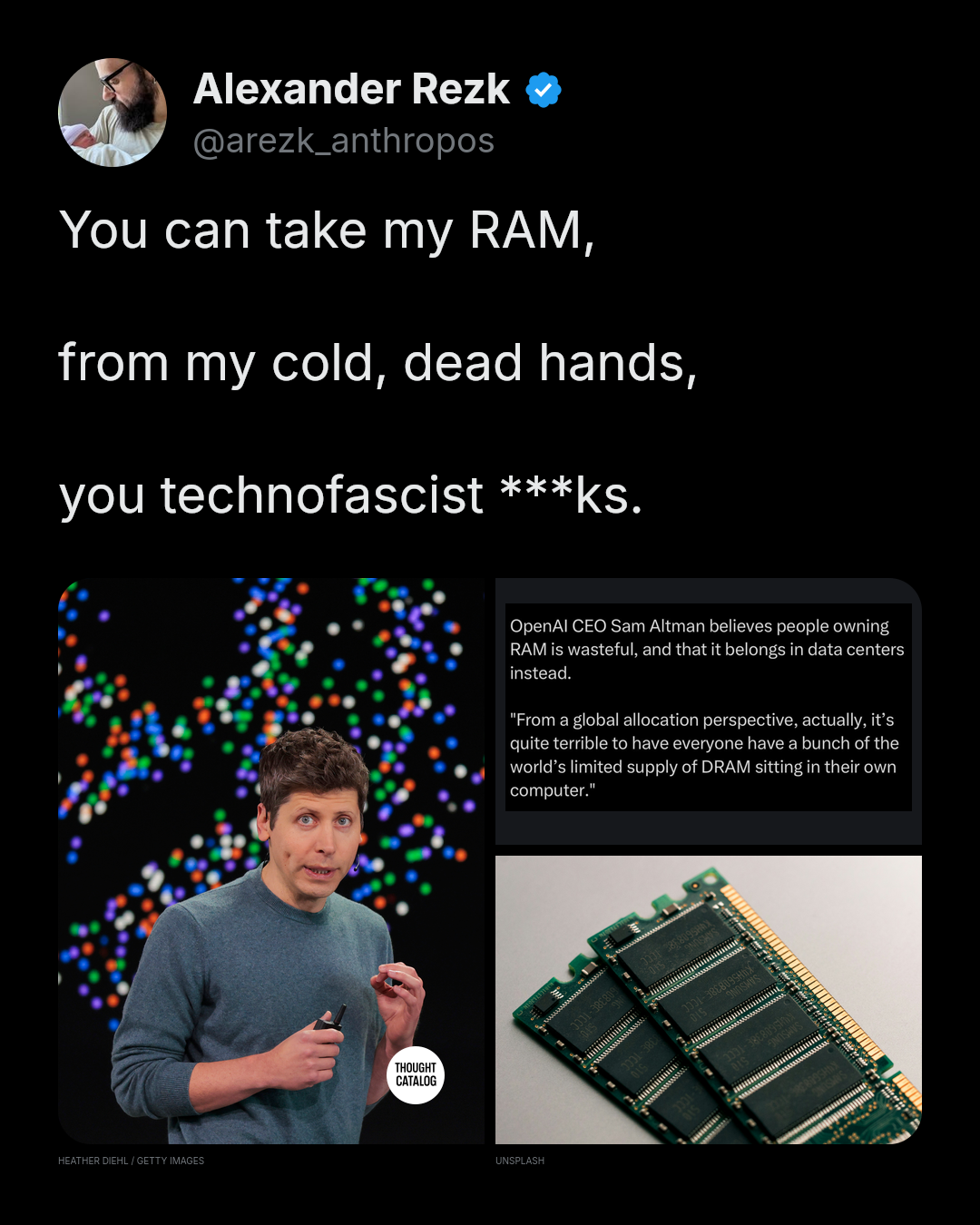
Discussing AI that runs directly on people’s computers, Altman argued that spreading the world’s limited DRAM supply across individual machines makes poor use of it. He described that memory as “being used five percent of the time” and said: “You want maximum utilization in the cloud if you’re trying to deal with this very supply constrained environment.”
OpenAI is also a major source of demand. In October 2025, Samsung said memory needs for OpenAI’s Stargate data centers were “projected to reach up to 900,000 DRAM wafers per month.” That figure is a projection of future demand.
The consumer market has already changed. In December 2025, Micron said it would stop selling its Crucial memory to consumers, explaining that “the AI-driven growth in the data center has led to a surge in demand.” A typical 32GB DDR5 memory kit that cost about $82 in August 2025 had climbed to about $310 by that December.
On Oct. 31 in Seoul, Altman turned to another part of the personal computer: the keyboard. About 50 Samsung presidents each received a $230 Codex Micro from him, a 13-key pad for OpenAI’s coding agent.
Altman said that “in a world where you speak instructions to a computer and use AI, you might not need a full keyboard.”