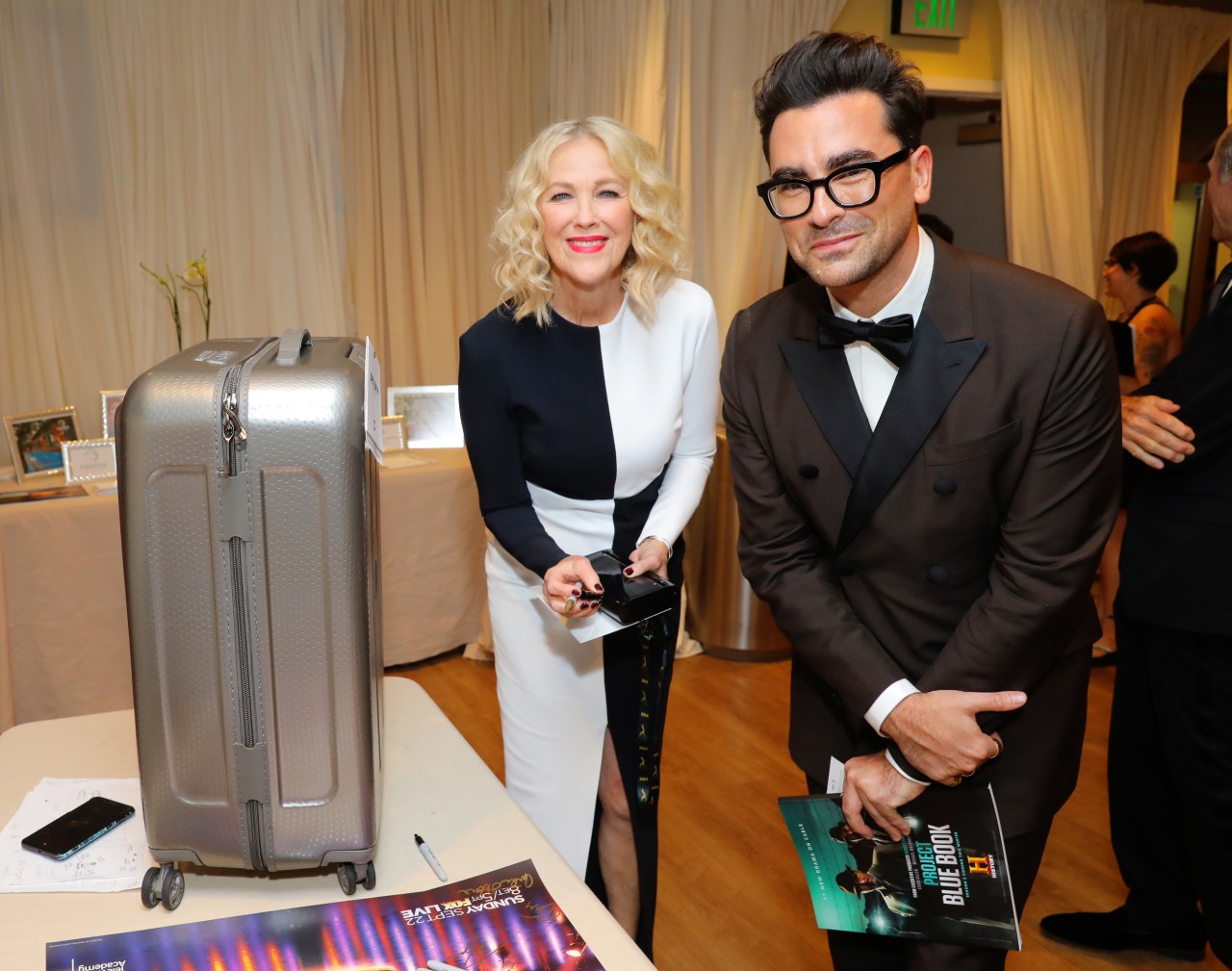
The grief line making the rounds on TikTok right now is a scene from a movie, not something from a therapist or a textbook.
“I’ve been reading that the brain is like a muscle. It’s why getting over a death is so hard, because your brain has been trained to feel things for a person. And when they go away, your head is still operating under the impression that it should feel those things for that person. Like muscle memory.” — Dan Levy
The words belong to Marc Dreyfus, the character Dan Levy plays in Good Grief, the 2023 film he wrote, directed and starred in. Marc’s comparison is to muscle memory: after someone’s gone, the brain continues to expect the feelings it learned to associate with them. For Marc, whose husband Oliver was killed in a car crash, the brain resembles a muscle that has undergone that training.
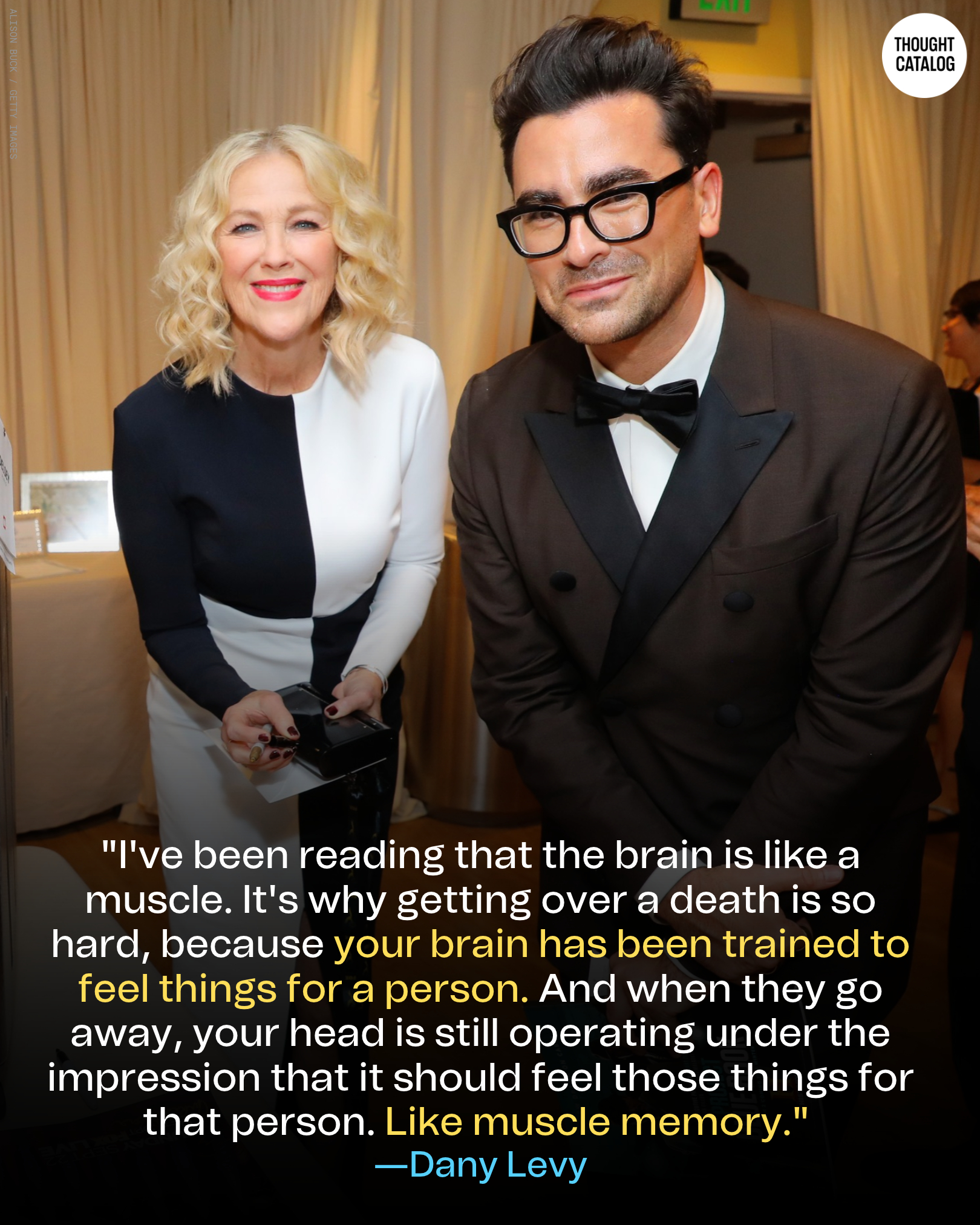
A counselor in Edmonton named Jasmine Chadha reposted the clip this weekend with her own note about grief living in the body. Her examples were the impulse to reach for someone and the expectation of sharing something with them, either of which can persist long after you know they’re gone.
What the clip leaves out is the rest of Marc’s thought. In the full scene, he goes on to say he’s trying to train his brain to not feel as much for right now, just to get through the next year. He’s describing numbing himself rather than healing.
Levy has called that mindset “somewhat avoidant,” a coping move for unbearable pain rather than wisdom to live by. The movie knows it too. Later, a character who lost her wife 12 years earlier tells Marc that to avoid sadness is also to avoid love.
The muscle-memory line lands because it’s true about how loss works. The part that gets cut is the part where the film pushes back on it.